
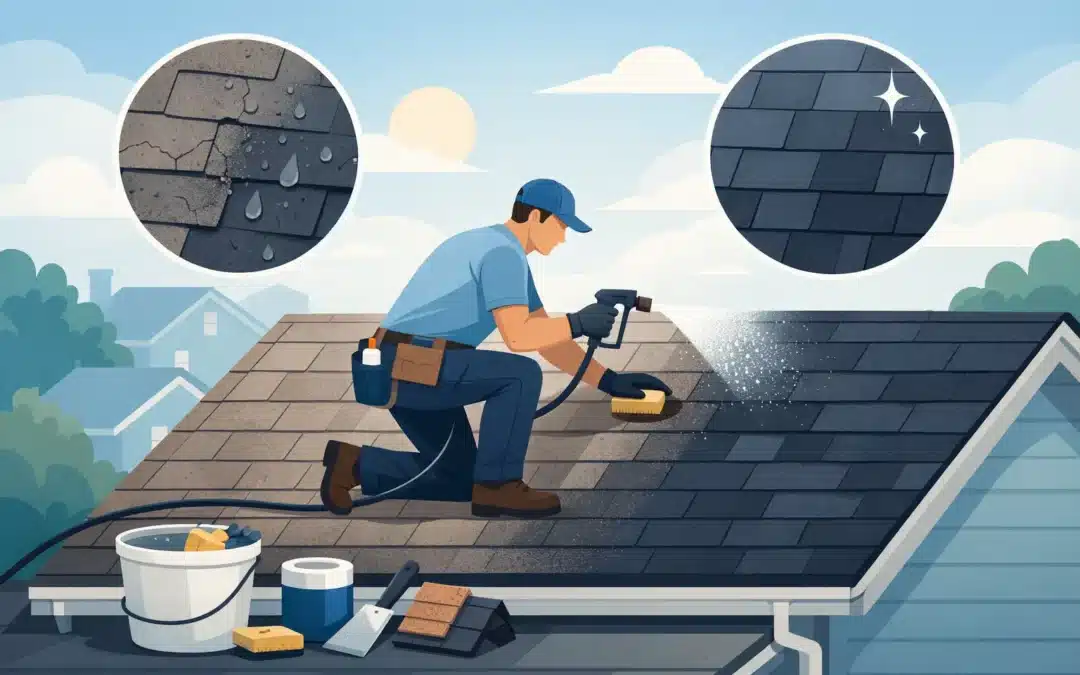
A roof can look tired long before it is truly finished. Faded color, scattered granules in the gutters, and shingles that feel dry or brittle are warning signs that an asphalt roof is aging – not automatic proof that it needs to be torn off and replaced. Knowing how to restore shingles starts with recognizing the difference between surface aging and genuine roof failure.
For many homeowners, professional shingle restoration can preserve a structurally sound roof, improve curb appeal, and delay the high cost and disruption of premature replacement. The right approach depends on the roof’s condition, the age of the shingles, and whether the underlying system is still doing its job.
What Shingle Restoration Actually Does
Asphalt shingles are not meant to stay unchanged forever. Sun exposure, heat cycles, rain, wind, and oxidation gradually draw out the oils that help shingles remain flexible. As that flexibility declines, shingles become more vulnerable to cracking, granule loss, and weather-related wear.
Shingle restoration is designed for roofs that are aging but still serviceable. Rather than covering up the roof with paint or treating every faded roof as a replacement project, a professional restoration process cleans the roof, addresses qualifying minor issues, and applies a treatment formulated to rejuvenate weathered shingles. The goal is to restore flexibility at a molecular level, reduce ongoing granule loss, revive color, and help extend the functional life of the existing roof.
This is not a shortcut for serious roof damage. Restoration cannot repair rotten decking, a failing underlayment, widespread storm damage, or shingles that have already lost their ability to protect the home. It is a practical middle path for homeowners whose roofs are aging visibly but remain good candidates for preservation.
First, Determine Whether Your Roof Can Be Restored
Before deciding how to restore shingles, begin with an honest condition assessment. A roof may be a restoration candidate when its shingles are weathered, faded, dry, or beginning to shed granules, but are still largely intact and properly adhered. The roof should not have active, unexplained leaks or significant structural concerns.
A qualified inspection should consider more than what can be seen from the driveway. The inspector should check for cracked or missing shingles, lifted edges, exposed nail heads, soft spots, flashing issues, damaged vents, and signs of water intrusion in the attic. They should also look at how much granule loss has occurred and whether the shingles have become severely curled or brittle.
Restoration may make sense if the roof is structurally sound and the aging is primarily caused by normal weather exposure. Replacement is usually the better choice when there are widespread missing shingles, major hail or wind damage, persistent leaks, sagging roof areas, compromised decking, or extensive curling and splitting. A dependable provider will tell you when restoration is not the right answer.
The Professional Process to Restore Asphalt Shingles
A quality restoration should be a controlled, roof-specific service, not a one-size-fits-all spray-and-go job. While application methods vary by provider and roof condition, the process generally follows four practical stages: inspect, clean, prepare, and treat.
Inspect the roof and document its condition
The process begins with a detailed inspection. This establishes whether the roof qualifies and identifies repairs that must happen before any treatment is applied. It also gives the homeowner a clear baseline for the roof’s appearance and condition.
This stage matters because visible fading alone does not tell the whole story. A professional should identify the cause of discoloration, determine whether dark streaks are algae or accumulated debris, and verify that the roof can still perform as a weather barrier.
Clean away debris and organic growth
Leaves, dirt, moss, algae, and other buildup can hold moisture against the shingles and make an aging roof look worse than it is. Cleaning helps restore the roof’s appearance and prepares the surface for treatment.
Cleaning must be done carefully. High-pressure washing can dislodge granules, damage shingles, and force water under the roofing system. The correct method is a low-impact cleaning process suited to asphalt shingles, with attention to gutters, landscaping, and runoff management.
Complete qualifying repairs before treatment
Minor repair needs should be resolved first. That may include replacing isolated damaged shingles, securing loose materials, correcting small flashing concerns, or addressing penetrations around vents and pipe boots.
Restoration treatment is intended to preserve existing shingles, not replace necessary repair work. Treating a roof before addressing obvious defects can create false confidence and leave the homeowner with preventable problems later.
Apply a professional shingle-restoration treatment
Once the roof is clean, dry, and confirmed as a candidate, a trained applicator applies the restoration treatment evenly across the shingle surface. A biodegradable formulation designed for asphalt shingles can replenish the flexibility lost through weathering while enhancing the roof’s appearance.
Roof Shield’s proprietary treatment is applied by certified applicators who follow defined preparation and application standards. That quality control is valuable because coverage, weather conditions, roof pitch, and shingle condition all influence results. A proper application should be supported by clear expectations, documentation, and warranty information.
What Results Should Homeowners Expect?
The most immediate change is often visual. A treated roof can regain a richer, more uniform color and look better maintained from the street. That renewed appearance can be meaningful for homeowners planning to stay in the home as well as those preparing to sell.
The longer-term value is in helping aging shingles remain flexible and resilient. Better flexibility can reduce the tendency toward brittleness and ongoing wear. Restoration may also help slow further granule loss, which matters because granules shield asphalt shingles from ultraviolet exposure.
Results depend on the starting condition of the roof. A roof with moderate weathering may show a dramatic improvement. A roof with severe physical damage will not become new again, and responsible providers should never promise that it will. The strongest value comes from treating a roof at the right time – after signs of aging appear, but before deterioration crosses into failure.
Why Restoration Can Be Smarter Than Replacement
Full roof replacement remains necessary in many situations. When it is needed, it protects the home and should not be delayed. But replacing a roof solely because it looks old can mean discarding shingles that still have useful life left.
Restoration offers a lower-disruption alternative for qualifying roofs. It can cost substantially less than replacement, avoid the noise and mess of a tear-off, and reduce the volume of roofing material sent to landfills. For homeowners balancing maintenance priorities, that can free up budget for other important improvements without ignoring the roof.
There is also a timing advantage. A successful restoration can give homeowners more control over when a future replacement happens. Instead of being forced into a rushed decision after accelerated aging or visible decline, they can preserve the current roof while planning ahead.
Avoid DIY Fixes That Create Bigger Problems
Homeowners can help protect an aging roof by keeping gutters clear, trimming branches away from the roofline, watching for debris buildup, and scheduling inspections after major storms. Those habits support roof longevity.
But attempting chemical treatments, coatings, or aggressive cleaning without professional guidance can create expensive damage. Some products trap moisture, alter shingle performance, void manufacturer protections, or produce an uneven cosmetic result. Walking on brittle shingles can also crack them, especially in hot weather or on steep slopes.
If your roof is showing fading, dry-looking shingles, or granules in the gutter, the practical next move is an inspection with a certified restoration professional. Ask whether the roof qualifies, what preparation is included, how the treatment is applied, what results are realistic, and what warranty coverage is available.
An aging roof does not always need to become a replacement project. When the structure is sound and the shingles are still viable, restoring them can be a responsible way to protect your home, your budget, and the material already on your roof.