
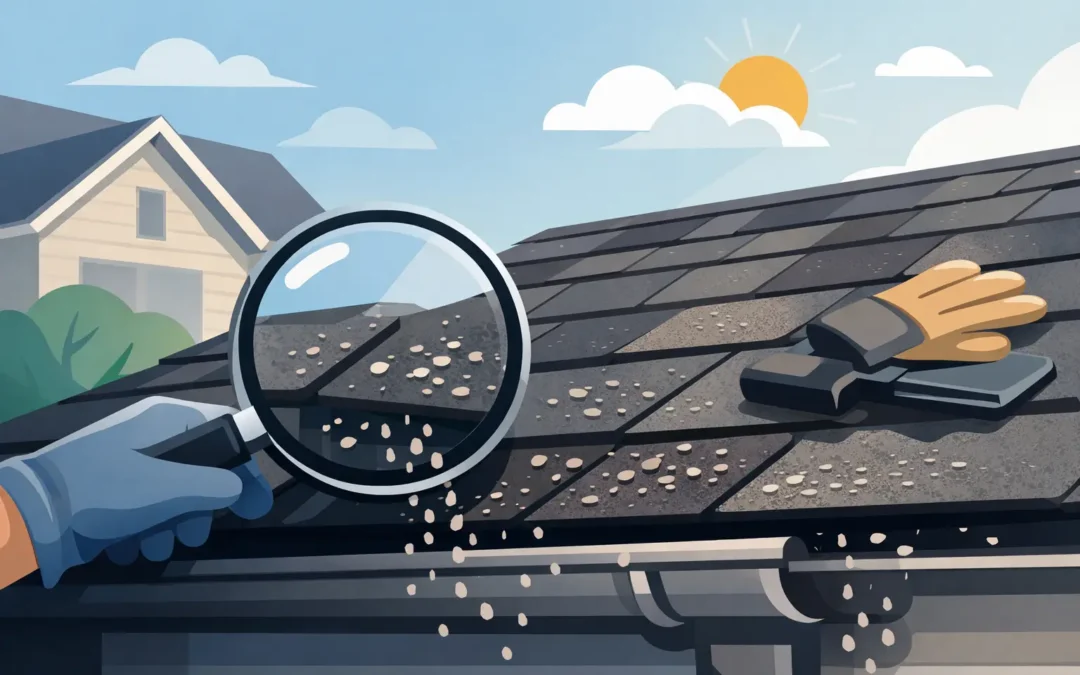
Granules in the gutter are easy to dismiss until a roof starts looking faded, patchy, or older than it should. Knowing how to prevent shingle granule loss helps homeowners protect one of the most valuable parts of their property before a manageable maintenance issue turns into a replacement decision.
Asphalt shingle granules do more than create color. They shield the asphalt layer from ultraviolet exposure, add fire resistance, and help the roof shed weather. A few loose granules after a new roof installation or a major storm may be normal. Persistent accumulation, exposed dark areas, or a noticeable change in roof color deserves a closer look.
Why Shingle Granule Loss Happens
Every asphalt shingle roof ages. Sunlight slowly dries the oils that keep shingles flexible. Heat cycles cause expansion and contraction. Rain, wind, ice, and airborne debris add physical wear. As the asphalt layer becomes more brittle, the bond holding protective granules in place can weaken.
The speed of that process depends on the roof and its environment. A south-facing roof in a hot climate may weather faster than a shaded roof in a milder region. Poor attic ventilation can raise roof-deck temperatures and accelerate aging from below. Low-hanging branches, frequent hail, foot traffic, and aggressive cleaning can all remove granules that the roof needs to stay protected.
Granule loss can also signal a bigger concern. Curling shingle edges, cracked shingles, bald spots, widespread discoloration, or soft areas may point to advanced weathering or moisture-related damage. Prevention begins with separating normal wear from a roof that needs professional attention.
How to Prevent Shingle Granule Loss Before It Spreads
The most effective approach is not one dramatic repair. It is a consistent plan to reduce avoidable wear, address small issues early, and restore aging shingles when they remain structurally sound.
Keep debris and moisture off the roof
Leaves, needles, and small branches trap moisture against shingles. Over time, that moisture can encourage algae and moss growth, interfere with drainage, and keep roof areas from drying properly. Clean gutters regularly and remove roof debris with a blower or soft, non-abrasive method when it can be done safely.
Trim branches that touch or hang directly over the roof. This reduces abrasion in wind, limits falling debris, and discourages animals from accessing the roof. Do not treat tree trimming as purely cosmetic. A clear roof surface can reduce several sources of unnecessary wear at once.
Use gentle cleaning methods
Pressure washing is one of the fastest ways to strip granules from asphalt shingles. Even if the roof looks cleaner immediately afterward, the damage can shorten its service life and may affect manufacturer coverage. A roof should never be cleaned like a driveway.
If dark streaks, algae, or surface staining are present, use a roof-appropriate cleaning approach performed according to shingle manufacturer guidance. The right method depends on the roof’s age, condition, pitch, and surrounding landscaping. The goal is to remove biological growth and improve appearance without blasting away the protective surface.
Protect attic ventilation and drainage
A roof works with the attic beneath it. Inadequate intake and exhaust ventilation can allow heat and moisture to build up, stressing shingles from the underside and contributing to premature brittleness. Insulation issues can complicate matters by trapping heat or allowing conditioned air to escape into the attic.
Ask a qualified roofing professional to evaluate the complete system, including soffit intake, ridge or other exhaust vents, insulation, and signs of moisture. Also check that gutters, downspouts, and roof valleys move water away efficiently. Standing water and repeated overflow put extra stress on roof edges and the areas below them.
Limit foot traffic and avoid improvised repairs
Walking on shingles can loosen granules, especially during hot weather when the surface is softer or cold weather when older shingles are brittle. Avoid using the roof as a shortcut for holiday lights, satellite work, gutter repairs, or chimney access. When roof access is necessary, it should be planned and minimized.
Improvised sealants and patches can create their own problems by trapping water or changing how a roof drains. Replace damaged shingles, repair flashing issues, and address loose fasteners with materials and methods suited to the existing roof system. Small repairs are often cost-effective when completed before water reaches the roof deck.
Schedule Inspections Around Real Risk Events
A roof inspection should not wait until a ceiling stain appears. An annual professional inspection can establish a baseline for granule wear, flashing condition, drainage, ventilation, and vulnerable areas around penetrations. It is also wise to schedule an assessment after hail, high winds, falling limbs, or other severe weather.
Homeowners can do simple visual checks from the ground. Watch for unusually heavy gutter granules, missing shingles, lifted tabs, dark exposed patches, sagging rooflines, or staining near vents and chimneys. Take photos from the same general location over time. A visible change is easier to evaluate when there is a record of what the roof looked like last season.
Inspection does not always mean replacement. A dependable assessment should explain whether the roof needs minor repair, routine maintenance, restoration, or full replacement based on its actual condition. That distinction matters because replacing a roof that still has useful life can be an expensive and wasteful choice.
Consider Restoration for Weathered, Structurally Sound Shingles
When shingles have begun to lose flexibility and show early-to-moderate weathering, a restoration treatment may help slow further deterioration. This option is not appropriate for every roof. Roofs with active leaks, widespread missing shingles, severe hail damage, compromised decking, or end-of-life structural issues may require repairs or replacement instead.
For qualifying asphalt shingle roofs, restoration focuses on the condition beneath the granules. Roof Shield’s proprietary biodegradable treatment is designed to penetrate aging shingles at a molecular level, helping restore flexibility and improve the shingle’s ability to retain its protective granules. The result can be a more even appearance, reduced ongoing granule loss, and added functional roof life without the cost, disruption, and landfill impact of premature replacement.
The value is practical. A full roof replacement is a major capital expense, and it can create significant material waste when the existing roof is still structurally viable. Restoration gives homeowners another path: Clean. Restore. Protect. When performed by a certified applicator on an eligible roof, it can preserve the asset already in place while providing warranty-backed confidence.
For roofing and home-service professionals, this also creates a better conversation with customers. Rather than presenting replacement as the only answer, a restoration offering allows contractors to identify eligible roofs, solve a real maintenance problem, and provide a lower-cost, environmentally responsible alternative. The right recommendation remains condition-based, not one-size-fits-all.
Know When Prevention Is No Longer Enough
Granule loss prevention has limits. If shingles are extensively bald, curled, cracked, torn, or missing, the roof may no longer have the surface protection needed for restoration to perform as intended. The same is true when there are ongoing leaks, rotted decking, major flashing failures, or storm damage that affects the roof system beyond its shingles.
In these cases, delaying necessary repairs can increase interior damage and total project cost. A qualified roof professional should identify the cause of the problem first, then recommend the most responsible next step. The smartest solution is the one that protects the home, not simply the one with the largest scope.
Aging shingles do not automatically mean a roof is finished. With gentle maintenance, proper ventilation, timely repairs, and a condition-based restoration evaluation, homeowners can make a more informed decision about protecting their roof’s remaining life and value.