
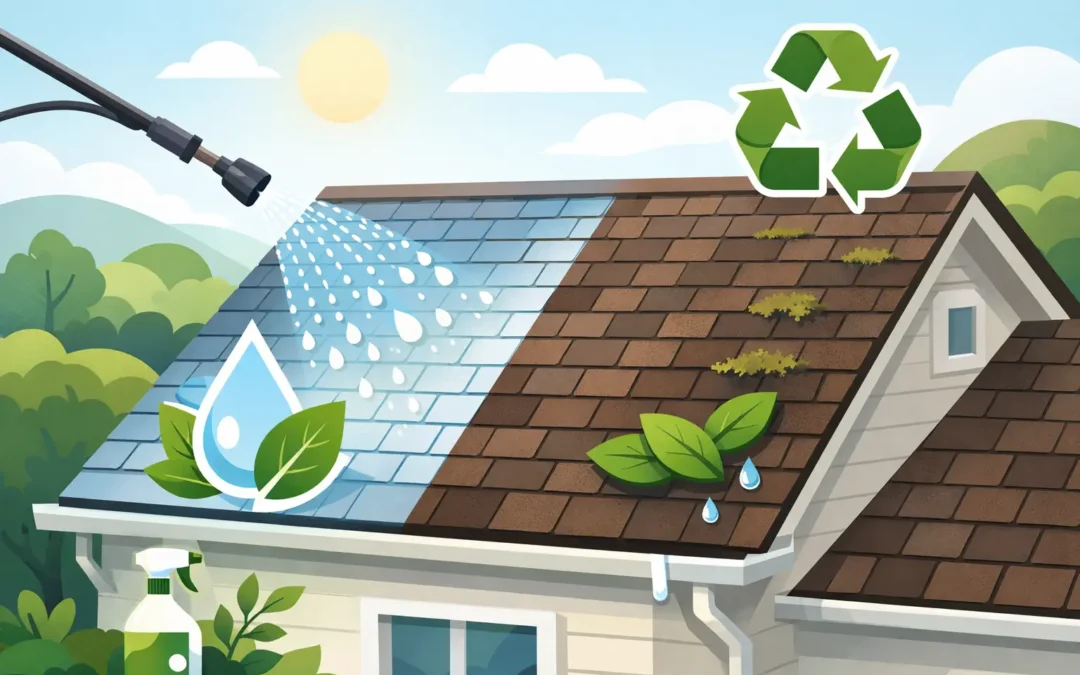
An asphalt shingle roof rarely fails all at once. Years of sun exposure, changing temperatures, rain, and wind gradually pull out the oils that help shingles stay flexible. The roof may still be protecting the home, yet its surface can begin to look faded, dry, and worn – often long before replacement is the only option. A biodegradable roof treatment for shingles gives qualified aging roofs a practical way to restore performance and appearance while avoiding the cost and waste of premature tear-off.
For homeowners, that can mean protecting a major asset for less than the price of replacement. For roofing and exterior-service professionals, it creates a differentiated restoration service that solves a real customer problem: a roof that is aging but not ready for the landfill.
What a biodegradable roof treatment for shingles does
A quality treatment is not a cosmetic coating designed to hide roof wear. It is a restorative solution formulated to penetrate aging asphalt shingles and replenish the oils that weathering has depleted. By restoring flexibility at a molecular level, the treatment can help shingles better withstand normal expansion, contraction, and everyday exposure.
That difference matters. Brittle shingles are more vulnerable to cracking, curling, and granule loss. Once protective granules loosen at an accelerated rate, the roof can lose color, look older than it is, and become increasingly exposed to ultraviolet damage. A restoration-focused treatment addresses the condition of the shingle itself rather than simply covering the symptoms.
Roof Shield uses proprietary biodegradable technology to rejuvenate qualifying asphalt shingle roofs. The goal is straightforward: Clean. Restore. Protect. Homeowners receive a lower-cost alternative when replacement is not yet necessary, while certified applicators can offer a high-value service beyond the conventional replace-it-first model.
Why biodegradable matters for roof restoration
Every roof replacement creates a material and disposal decision. When an aging roof is removed before it has reached the end of its functional life, usable shingles, nails, underlayment, and related debris can head to a landfill. Extending the serviceable life of a roof helps reduce that avoidable waste.
A biodegradable treatment also provides a more responsible approach to routine roof care. It is designed to perform its restorative function without turning preservation into another heavy material-use project. That makes it an appealing choice for homeowners who want to maintain their property thoughtfully without sacrificing results.
Sustainability is only meaningful when it is paired with performance. The best treatment decision is not simply the one with an environmentally responsible label. It is the one that is appropriate for the roof’s actual condition, applied correctly, and supported by clear quality standards and warranty coverage.
When treatment makes sense – and when it does not
A roof treatment is not a substitute for necessary repairs or replacement. It works best on asphalt shingle roofs that are weathered and showing signs of age, but remain structurally sound. A professional assessment should look at shingle condition, active leaks, missing materials, flashing, ventilation, roof deck concerns, and the overall age and maintenance history of the roof.
A good candidate may have fading color, early brittleness, visible dryness, or moderate granule loss while the shingles remain intact and the roof is still performing its primary job. In this situation, restoring shingle flexibility can be a strategic investment that helps preserve the roof and improve curb appeal.
Treatment is not the right answer for every home. Significant storm damage, widespread cracked or missing shingles, active leaks caused by failed components, soft decking, or a roof already at the end of its serviceable life may require repair or replacement instead. A dependable provider should be willing to say so. Honest roof restoration begins with matching the solution to the roof, not forcing every roof into the same service.
The application process should be controlled, not rushed
Results depend on more than the product. Surface preparation, weather conditions, application consistency, and post-application inspection all affect performance. That is why homeowners should look for trained professionals who follow a defined process rather than treating roof restoration as a quick spray-and-go service.
The work typically starts with an assessment to confirm that the roof qualifies. The roof is then cleaned to remove surface debris and buildup that could interfere with even treatment. After the shingles are prepared, the biodegradable restoration solution is applied according to established coverage and safety standards. A final review helps confirm that the roof has been treated consistently and that the property is left clean.
The visible change can be immediate in some cases, particularly where faded shingles regain richer color. The more meaningful change happens as the treatment works into the shingles to help restore their flexibility. Homeowners should have realistic expectations: a treatment revitalizes an existing roof; it does not make damaged shingles new or erase the need for proper maintenance.
The financial value is bigger than the initial price
Roof replacement is one of the largest maintenance expenses many homeowners face. It can also bring scheduling demands, noise, debris, and disruption around the property. When a roof is still a viable candidate for restoration, treatment may cost substantially less than replacement while helping defer that larger project.
Deferring replacement is not about ignoring a roof problem. It is about preserving a roof that still has useful life and creating time to plan ahead. That can make a meaningful difference for homeowners balancing insurance deductibles, renovation priorities, or other major expenses.
There is also a curb-appeal benefit. A faded, dry-looking roof can make an otherwise well-kept home appear older. Restoring color and improving the roof’s appearance can help protect the overall impression of the property without committing to a full reroof before it is needed.
Warranty coverage is another part of the value conversation. A five-year transferable warranty, when available through a qualified program, gives homeowners added confidence that the work is backed by defined standards. Before choosing a provider, ask what the warranty covers, whether it transfers to a new owner, and what maintenance or eligibility requirements apply.
A growth opportunity for roofing professionals
For contractors, biodegradable shingle restoration fills a gap between cleaning and replacement. Many customers are not ready to spend on a new roof, but they are concerned about an aging roof’s appearance and condition. Without a credible restoration option, those conversations can end with a customer waiting, worrying, or calling another provider.
Adding a specialized treatment service gives qualified businesses a way to serve that middle market. It can create new revenue from existing customer relationships, support recurring inspection and maintenance conversations, and distinguish a company in a crowded replacement-focused market.
The opportunity is strongest when it is delivered with discipline. Applicators need product training, clear qualification standards, operational guidance, and a dependable customer message. Protected territories and lead-generation support can help a contractor build a real service category, not merely add another item to a price sheet.
Homeowners benefit from that professionalism as well. They deserve a provider who can explain the trade-offs plainly: what treatment can improve, what it cannot fix, why their roof qualifies, and why restoration may be the smarter financial and environmental decision.
Questions to ask before choosing a provider
Start with the condition assessment. Ask whether the provider will inspect for leaks, structural issues, missing shingles, and repair needs before recommending treatment. Then ask how the shingles will be cleaned and prepared, what biodegradable product is being applied, and whether the technician is certified to use it.
It is also wise to discuss expected outcomes in specific terms. Will the treatment help restore flexibility? What level of color revitalization is realistic for this roof? How will the provider document the roof’s pre-treatment condition? Clear answers are a sign that the company is focused on long-term value rather than a fast sale.
Finally, review warranty details and ownership transfer terms in writing. A roof is too important to trust to vague promises, and a restoration service should be supported by standards that protect both the homeowner and the provider.
A qualified roof does not have to become a replacement project simply because it looks weathered. A certified assessment can show whether restoring the shingles now is the practical step that protects your home, your budget, and the useful life already built into your roof.