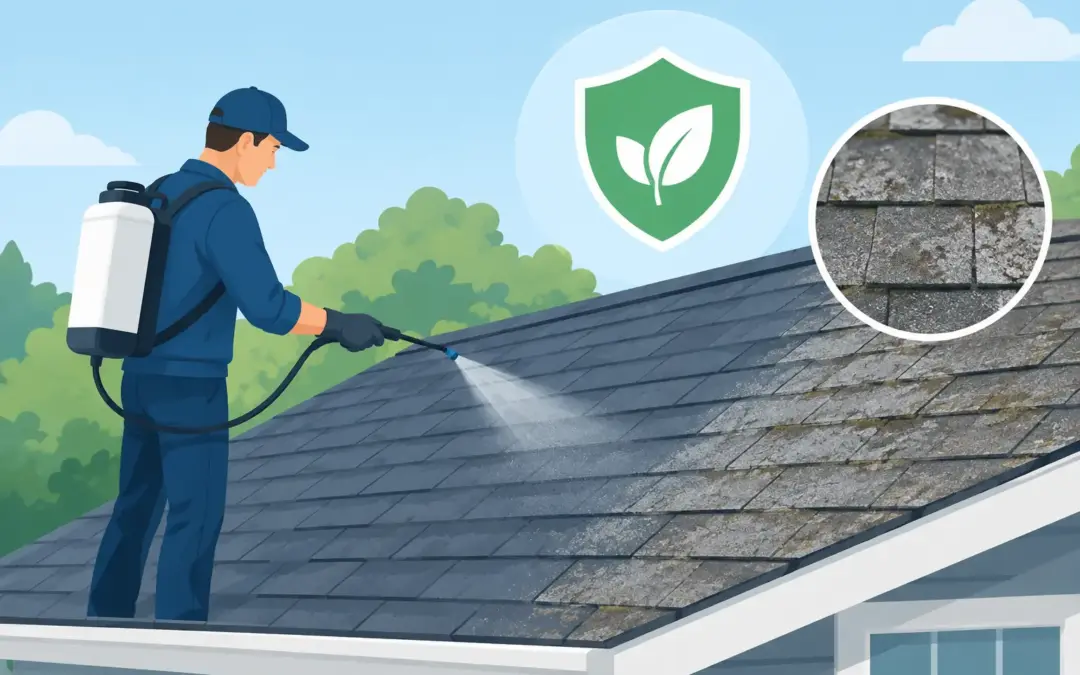
A roof can look tired long before it has reached the end of its useful life. Fading color, dry-looking shingles, and early granule loss often trigger a replacement conversation, even when the roof is still structurally sound. So, is roof treatment safe? When the treatment is purpose-built for asphalt shingles, professionally applied, and used on the right roof, it can be a safe, practical way to restore flexibility and extend service life.
The key is separating legitimate roof restoration from shortcuts. Not every liquid applied to a roof is appropriate, and not every aging roof is a candidate. Homeowners deserve a clear answer about what goes on their roof, where it goes after application, and how it affects the shingles protecting their home.
Is Roof Treatment Safe? It Depends on the Product and Process
A quality roof treatment is designed to address a specific problem: asphalt shingles lose essential oils as they age. Sun, heat, rain, wind, and seasonal temperature swings gradually dry the shingle’s asphalt layer. As flexibility declines, shingles can become more vulnerable to cracking, curling, and granule loss.
A properly formulated rejuvenating treatment works by penetrating the shingle and replenishing flexibility at a molecular level. It is not roof paint, a heavy coating, or a cosmetic cover-up. The goal is to preserve the existing roofing material, not create a surface layer that can trap moisture or interfere with how shingles shed water.
Safety depends on three things: the treatment’s formulation, the roof’s condition, and the applicator’s process. A biodegradable formula made for aging asphalt shingles is fundamentally different from an untested oil, sealant, or coating applied as a one-size-fits-all fix.
That distinction matters. The wrong product can leave residue, change the roof’s appearance unpredictably, create slip hazards during application, or fail to solve the underlying issue. The right restoration technology is selected and applied with the roof system, property, and homeowner in mind.
What a Safe Treatment Should Do – and Not Do
A safe shingle restoration treatment should absorb into weathered asphalt shingles without forming a thick film across the roof. Shingles need to remain able to perform their primary job: directing water down and off the roof.
The treatment should also be biodegradable and applied in a controlled manner. Professional crews plan around the home’s landscaping, siding, gutters, and outdoor living areas. They use the correct equipment and application rate, rather than oversaturating the roof or treating areas that should not receive the product.
Just as important, a responsible provider does not claim every roof can be restored. Treatment is not a repair for active leaks, widespread shingle failure, major storm damage, rotten decking, or roofs that have already reached the end of their functional life. In those cases, repair or replacement may be the safer and more economical decision.
A credible inspection comes first. It should identify whether the shingles are aging but serviceable, whether flashing and penetrations are sound, and whether there are existing issues that need correction before treatment. This protects the homeowner from spending money on a service that is not suited to their roof.
Safety for Your Home, Family, and Property
Homeowners often ask whether roof treatment poses a risk to children, pets, gardens, or outdoor spaces. That is a reasonable question, especially when the work takes place above landscaping, driveways, and patios.
With a biodegradable treatment and disciplined application practices, the risk can be managed responsibly. Certified applicators protect surrounding areas, monitor overspray, and follow product-specific handling procedures. Homeowners should receive clear instructions about access to the work area during application and any short-term precautions that apply while the product settles and dries.
The roof itself is also part of the safety conversation. Walking on brittle shingles can cause damage, particularly in hot weather or on steep slopes. Professional application methods, trained crews, and appropriate safety equipment reduce unnecessary foot traffic and help protect both the roof and the people working on it.
Ask direct questions before scheduling service. What is the treatment made to do? Is it biodegradable? How will landscaping and exterior surfaces be protected? Who will perform the work? A trustworthy provider should answer clearly, without treating reasonable safety questions as an inconvenience.
Why Professional Application Matters
Roof restoration is not a do-it-yourself spray-and-go project. Product selection, weather conditions, roof access, application rate, and coverage all influence the outcome. Applying too much or too little can compromise performance. Applying in unsuitable conditions can affect absorption and drying. Ignoring damaged areas can create unrealistic expectations about what treatment can accomplish.
A certified applicator brings process control to the job. That begins with evaluating the roof and continues through surface preparation, precise application, and final quality checks. The best providers treat roof restoration as a professional preservation service, not an add-on sold without inspection.
For homeowners, this approach creates confidence. You are not simply buying a product in a container. You are choosing an assessment, a controlled application process, and a provider accountable for the result.
For roofing and home-services professionals, certification matters for the same reason. A differentiated service only builds trust when it is delivered consistently. Training, exclusive technology, and documented procedures help applicators provide a cleaner, more reliable alternative to replacement-first recommendations.
When Roof Treatment Is a Smart, Safe Choice
Treatment is often a strong option for an asphalt shingle roof that is visibly weathered but still structurally viable. It may be especially appealing when shingles have lost flexibility or color but remain properly installed, the roof deck is sound, and there is no serious active damage requiring replacement.
The value is practical. Restoring an eligible roof can help reduce premature granule loss, refresh curb appeal, and delay the cost, noise, and landfill waste associated with a full tear-off. Rather than discarding a roof that still has useful life, homeowners can preserve the asset already protecting their home.
That environmental benefit should not be overlooked. Roof replacement creates a significant volume of waste, particularly when shingles are removed before their functional life is exhausted. A safe restoration treatment supports a more responsible maintenance strategy: clean, restore, protect.
Roof Shield’s proprietary biodegradable treatment is built around that strategy. By restoring aging asphalt shingles rather than automatically replacing them, eligible homeowners can pursue a lower-cost, warranty-backed path that supports both roof performance and responsible material use.
When Replacement Is the Better Answer
A safe recommendation includes knowing when to say no. Roof treatment cannot correct structural defects or reverse severe deterioration. If shingles are missing across large areas, the roof has storm-related damage, water intrusion has compromised the deck, or the roof is at the end of its serviceable condition, restoration should not be presented as a substitute for necessary repair or replacement.
This is where an honest inspection protects the homeowner. The goal is not to force every roof into one service category. The goal is to match the condition of the roof with the right solution and explain why.
A provider should also be careful around roof types outside the treatment’s intended use. Asphalt shingles have different needs than metal, tile, slate, wood shakes, or low-slope membrane systems. A treatment formulated for aging asphalt shingles should be used only where it has been designed and tested to perform.
Questions to Ask Before You Commit
Before approving any roof treatment, confirm that your roof has been inspected for leaks, damaged flashing, missing shingles, and structural concerns. Ask whether the product is designed specifically for asphalt shingles and whether it is biodegradable. Request an explanation of the application process, property-protection measures, expected results, and available warranty coverage.
It is also wise to ask what the treatment will not fix. That answer is often the clearest signal of a provider’s integrity. A professional who explains the limits of restoration is far more likely to recommend it appropriately.
The safest roof decision is not always the most expensive one. If your aging shingles are still viable, a professionally applied, biodegradable restoration treatment may give you a way to protect your home, preserve your roof, and postpone replacement for the right reasons.