
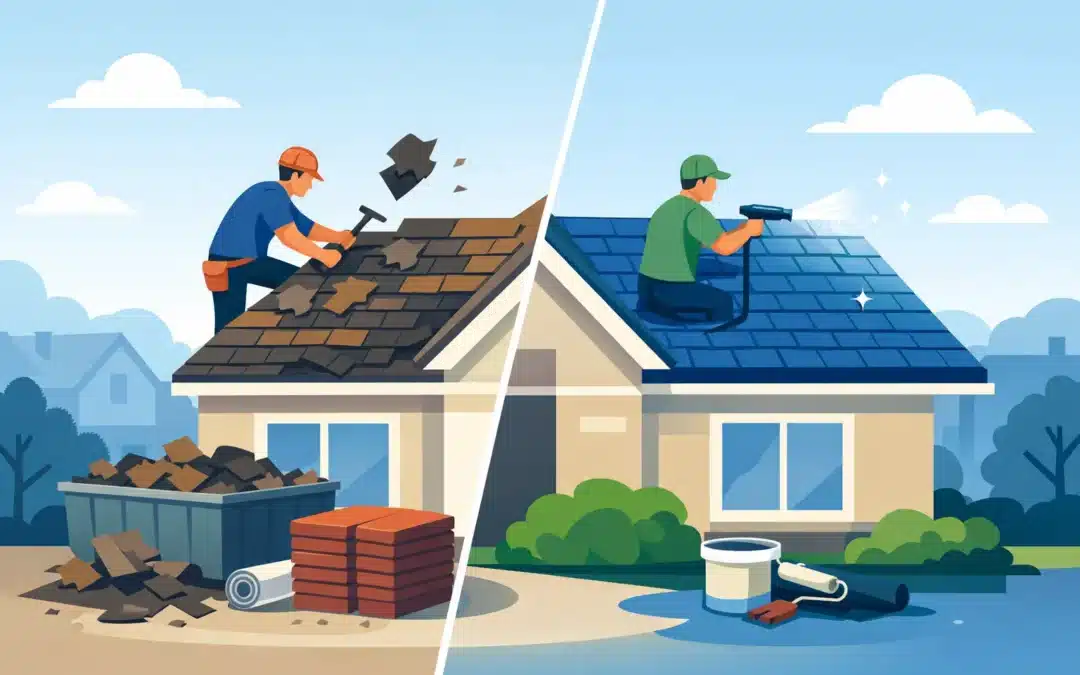
A roof can look tired long before it has reached the end of its functional life. Fading color, brittle shingles, and loose granules often prompt a replacement estimate, but a roof replacement cost comparison should begin with a more useful question: does this roof truly need to be removed, or can it be restored? For many homeowners with aging asphalt shingles, that distinction can mean saving thousands of dollars while keeping a serviceable roof out of the landfill.
What a Roof Replacement Really Costs
A full roof replacement is a major home project, not just a materials purchase. The final price reflects roof size, pitch, shingle selection, labor, local code requirements, tear-off, disposal, decking repairs, flashing work, permits, and the complexity of valleys, chimneys, skylights, and vents.
National cost ranges can be useful for planning, but they are not a substitute for a property-specific inspection. A straightforward single-story roof may fall near the lower end of local pricing. A steep roof with multiple layers, damaged decking, or difficult access can move sharply higher. Homeowners should also account for the indirect cost: landscaping protection, driveway access for disposal equipment, construction noise, and the disruption of an active tear-off.
Replacement is the right answer when shingles are missing across broad areas, leaks have caused underlying damage, the roof deck is compromised, or the system has reached the point where restoration cannot deliver dependable performance. It is a necessary investment when the roof can no longer protect the structure.
But replacement should not be the automatic answer simply because an asphalt shingle roof is aging.
Roof Replacement Cost Comparison: Replacement vs. Restoration
The most meaningful roof replacement cost comparison is not between one contractor’s estimate and another. It is between the cost of removing a roof that still has usable life and the cost of extending that life through a qualified restoration option.
Roof restoration is designed for aging asphalt shingle roofs that remain structurally sound but show the effects of sun exposure, weather, and time. As shingles age, they can lose flexibility and shed protective granules. Their color may appear dull, and the roof can begin to look closer to failure than it really is.
A proprietary biodegradable treatment such as Roof Shield works to rejuvenate weathered shingles at a molecular level. Rather than covering problems with a cosmetic coating, the process is intended to restore flexibility, reduce further granule loss, and revitalize the roof’s appearance. When the roof qualifies, restoration can extend functional life at a substantially lower cost than full replacement.
That lower upfront cost matters, but it is not the only value. A restoration project is typically less disruptive than a tear-off, creates far less material waste, and helps homeowners preserve an existing roofing asset rather than discard it prematurely.
The price difference is only part of the equation
A replacement quote covers a new roofing system and the labor required to remove the existing one. A restoration quote covers a different outcome: protecting and improving the roof already in place. These are not identical services, so the right choice depends on the roof’s actual condition and the homeowner’s goals.
If you plan to stay in the home, extending the life of a sound roof can improve maintenance planning and delay a larger capital expense. If you are preparing to sell, a cleaner, more uniform-looking roof may improve curb appeal without requiring an immediate replacement project. In either case, warranty coverage and provider qualifications should be part of the value calculation, not an afterthought.
How to Tell Whether Your Roof Is a Restoration Candidate
A roof cannot be restored simply because replacement is expensive. A reliable assessment starts with the roof’s structure, not its surface appearance.
A good candidate typically has aging asphalt shingles that are weathered but still installed securely, with no widespread active leaks, major storm damage, or serious decking concerns. The roof should have adequate remaining integrity for a treatment to protect and extend its service life.
Signs that deserve a professional evaluation include fading, visible dryness, minor granule loss, and shingles that appear worn but remain generally intact. These conditions may point to an aging roof that can benefit from restoration.
On the other hand, curled or cracked shingles across large sections, exposed decking, chronic leak areas, sagging rooflines, or widespread missing shingles can indicate that replacement is the better investment. No treatment should be positioned as a solution for structural failure or active problems that require repair.
The most dependable path is an honest inspection from a qualified professional who can explain what they see, what can be addressed, and what cannot. The goal is not to force every roof into restoration. The goal is to match the property with the option that protects it responsibly.
Look Beyond the Initial Estimate
Homeowners sometimes compare proposals by looking only at the final number. That can lead to a costly decision if the scope, warranty, material handling, and expected outcome are unclear.
When reviewing a replacement proposal, ask whether tear-off and disposal are included, whether decking repairs are priced separately, how flashing details will be handled, and what workmanship warranty applies. A low initial estimate can change quickly when necessary repairs are discovered after old shingles come off.
When reviewing a restoration proposal, ask how the roof is evaluated, how it is prepared, what the treatment is designed to do, and whether the provider offers a transferable warranty. You should also understand what routine maintenance or roof conditions could affect coverage over time.
A clear proposal should make it easy to compare total value. It should not rely on vague promises, pressure, or an assumption that newer is always better.
The Environmental Cost of Replacing Too Soon
Asphalt shingle replacement produces a large volume of waste. When a roof still has recoverable life, tearing it off sends usable material into the disposal stream and demands new materials, transportation, and labor before they may be necessary.
Restoration supports a more practical approach to roof maintenance: clean, restore, and protect what is already working. It does not eliminate the eventual need for replacement, but it can delay it. That extension can reduce waste, lower demand for replacement materials, and help homeowners get more value from the roof they have already purchased.
For environmentally conscious homeowners, this is a meaningful part of the decision. Sustainability does not have to mean compromising on performance or appearance. It can mean making a measured decision based on the roof’s actual condition.
A Better Way to Plan for Roof Costs
The right time to explore restoration is before a roof becomes an emergency. Waiting until water enters the home limits the available options and can turn a manageable maintenance decision into a larger repair project.
Consider a professional roof assessment when your shingles begin to look weathered, lose visual uniformity, or approach the age when replacement conversations usually begin. Early evaluation gives you time to compare costs, understand eligibility, and choose based on evidence rather than urgency.
For contractors and home-service professionals, this same shift creates a valuable customer conversation. Restoration gives qualified providers a differentiated service between routine cleaning and full replacement. It allows them to offer a practical, warranty-backed path for customers who need help but are not yet ready for a new roof.
A roof replacement cost comparison should lead to a decision that fits the roof, the budget, and the long-term plan for the property. When an aging asphalt shingle roof remains structurally sound, preserving it can be the smarter investment – for the homeowner, the home, and the materials already protecting it.