
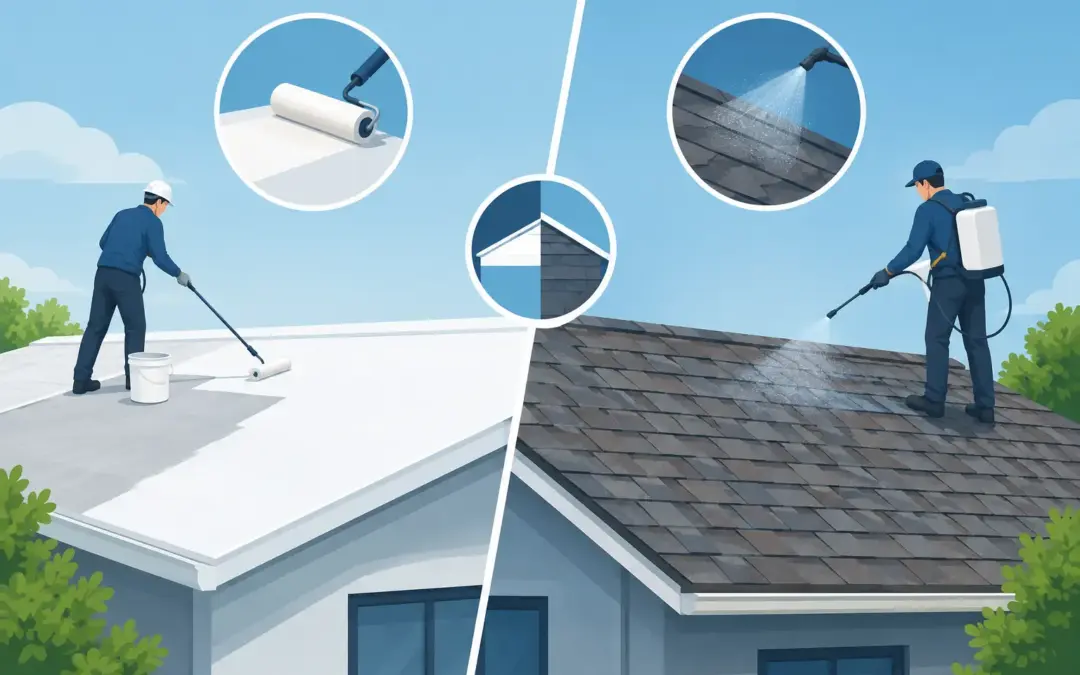
Aging asphalt shingles rarely fail all at once. First, the roof loses some color. Then granules collect in gutters, shingle edges begin to curl, and the surface becomes dry and brittle under years of sun and weather. At that point, the roof coating versus shingle treatment decision matters because these options are built to do very different jobs.
For a homeowner with an aging asphalt shingle roof, applying the wrong product can create a short-term cosmetic change without addressing the condition of the shingles underneath. The smarter path starts with understanding what each solution is designed to protect, where it works best, and when replacement is still the responsible choice.
Roof Coating Versus Shingle Treatment: The Core Difference
Roof coatings are typically liquid-applied membranes used on low-slope or flat roofing systems. Acrylic, silicone, polyurethane, and elastomeric coatings can form a protective layer over an appropriate roof surface. Their purpose is generally to seal, reflect sunlight, and help protect the roof assembly from moisture and UV exposure.
Shingle treatment is different. Rather than creating a film across the surface, a quality treatment for asphalt shingles is designed to penetrate and replenish the oils that weathered shingles lose over time. That restoration process can help shingles regain flexibility, improve their appearance, and better retain protective granules.
The distinction is more than technical. A coating changes the surface of a roof. A shingle treatment works to restore the existing asphalt shingles themselves. For homes with standard pitched asphalt shingle roofs, that difference should guide the conversation from the start.
Why Coating Asphalt Shingles Can Be a Poor Fit
Roof coating has a valuable place in commercial roofing and on certain residential low-slope systems. It is not automatically a good match for a conventional asphalt shingle roof.
Shingles are engineered as a layered, water-shedding system. They need to release moisture and allow water to travel down their surface and off the roof. A coating applied over shingles may interfere with that design, trap moisture in some situations, mask developing damage, or create adhesion issues as shingles expand and contract.
The visual outcome can also disappoint homeowners expecting a lasting restoration. A coated shingle roof may look uniform immediately after application, but the coating is still sitting on a textured, moving surface. As the roof experiences heat, cold, wind, and rain, that surface layer can crack, peel, wear unevenly, or require ongoing maintenance.
There is also a warranty question. Some shingle manufacturers may limit or void coverage when a roof is coated with an unapproved product. Before anyone applies a coating, the homeowner should verify the roof type, product compatibility, and manufacturer requirements. A lower upfront price is not a value if it introduces warranty risk or makes future repairs more complicated.
What Shingle Treatment Is Designed to Do
Asphalt shingles contain oils that help keep the asphalt layer flexible. Over time, sunlight, heat, rain, and changing temperatures deplete those oils. The shingles can become rigid, lose granules more easily, fade, and show the familiar signs of a roof moving closer to replacement.
A professionally applied shingle treatment is intended to address this aging process. After the roof is inspected and properly cleaned, the treatment is applied to absorb into weathered shingles. The goal is to restore flexibility at a molecular level, reduce ongoing granule loss, revive color, and extend the roof’s functional life.
That makes treatment especially compelling for a roof that is aging but still structurally sound. Instead of tearing off a usable roofing system simply because it looks tired or has begun to dry out, homeowners may be able to preserve the asset they already own.
Roof Shield’s proprietary biodegradable treatment is built around this restoration-first approach, with application performed through certified professionals and backed by a five-year transferable warranty on qualifying roofs. It is a practical alternative for homeowners who want to Clean. Restore. Protect. before committing to the cost and disruption of replacement.
When a Shingle Treatment Makes Sense
Treatment is not a shortcut for every roof problem. It works best when shingles have weathered but still have sufficient integrity to be restored. A professional assessment should confirm that the roof is a suitable candidate before any work begins.
A treatment conversation is often worthwhile when an asphalt shingle roof shows fading, early brittleness, modest granule loss, or an overall weathered appearance, yet is not leaking and does not have widespread missing, cracked, or severely curled shingles. It can also make sense for homeowners preparing to sell, managing a long-term property budget, or simply trying to avoid replacing a roof years before its useful life is exhausted.
The benefits go beyond appearance. Restored flexibility can help shingles perform more like they were designed to perform. Improved color and a more even finish can strengthen curb appeal. And preserving an existing roof helps keep usable roofing material out of landfills.
For many households, the financial advantage is equally clear. Roof replacement involves material, labor, tear-off, disposal, and the inconvenience of a major project. Treatment is substantially more affordable than premature replacement when the roof qualifies and the underlying system remains sound.
When Neither Option Is the Answer
Homeowners should be cautious of any provider who treats every roof as a candidate for a surface solution. Some roofs need repair. Others need replacement.
Active leaks, soft decking, storm damage, widespread shingle failure, significant flashing problems, or shingles that have reached the end of their usable life require a more direct repair or replacement strategy. No coating should be used to hide those conditions, and no treatment should be sold as a cure for structural defects.
A reliable assessment looks beyond the roof’s color. It considers the shingle condition, granule retention, roof age, ventilation, flashing, penetrations, drainage, and evidence of moisture intrusion. This is where a certified applicator adds real value: the recommendation should match the roof’s condition, not simply the service the provider prefers to sell.
A Better Decision Process for Homeowners
Start by identifying the roof system. If the home has a low-slope membrane roof, a coating may be a legitimate option worth evaluating. If it has standard asphalt shingles, ask whether the proposed product is specifically engineered for shingles and whether it restores the material or simply covers it.
Then ask for a condition-based recommendation. A qualified provider should explain what they see, identify repairs that must be made first, and be clear about the expected outcome. Homeowners should also ask how the application affects manufacturer warranties, what maintenance is required, and whether the work includes written warranty protection.
Finally, compare lifecycle cost rather than focusing only on the initial invoice. A coating that requires repeated maintenance or creates future repair challenges may not be the economical choice. A treatment that extends the serviceable life of a qualifying roof can create meaningful savings while reducing the environmental impact of an unnecessary tear-off.
The Business Opportunity Behind Restoration
For roofing and home-services professionals, the roof coating versus shingle treatment conversation creates an opportunity to offer customers a more precise solution. Replacement will always be necessary for failed roofs. But a replacement-only model leaves many homeowners with an uncomfortable choice between doing nothing and spending heavily before it is truly necessary.
Adding shingle restoration gives qualified contractors a differentiated service category for roofs that are too weathered to ignore but not ready to replace. It can create new customer conversations, help build repeat business, and position the company as a trusted advisor rather than a provider with one answer for every roof.
The strongest contractors lead with inspection, education, and realistic expectations. That approach protects the customer, protects the contractor’s reputation, and creates a business built on long-term value instead of one-time transactions.
A roof does not have to look new to deserve attention. If its structure is sound and its shingles are simply showing the effects of age, restoration may be the practical next step – one that protects the home, the budget, and the materials already in place.