
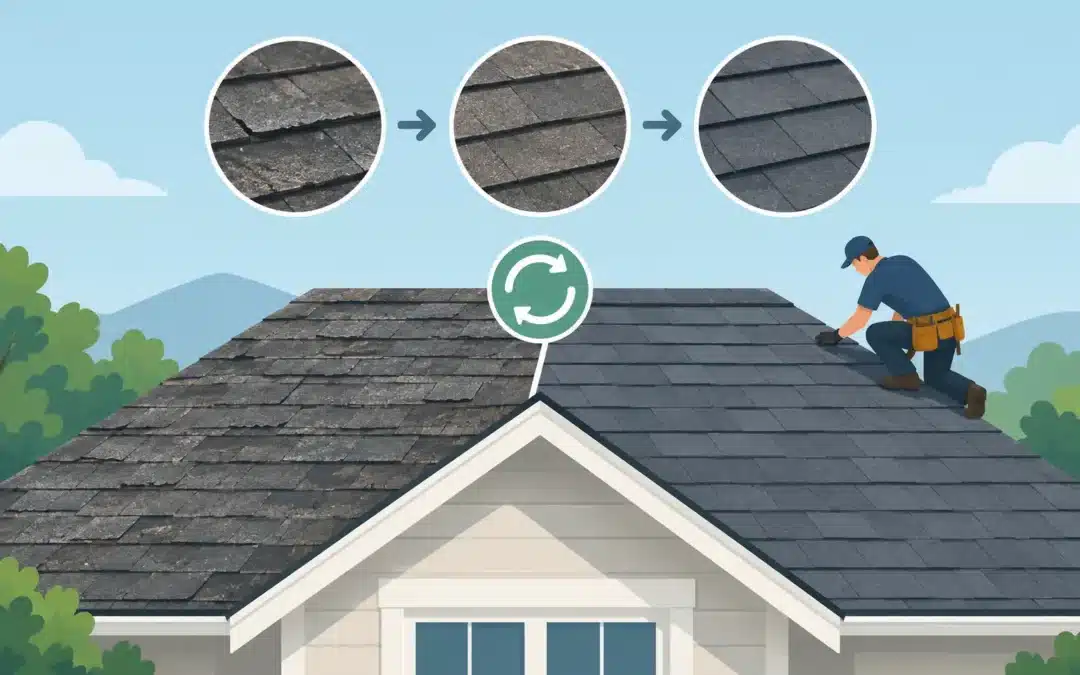
A roof can look worn long before it has reached the end of its useful life. Faded color, dry-looking shingles, and early granule loss often signal aging, but they do not automatically mean a replacement is the only answer. Understanding shingle lifespan helps homeowners make a better decision before a manageable maintenance issue becomes an expensive, disruptive project.
For roofing professionals, that same understanding creates a better customer conversation. Instead of treating every aging roof as a tear-off opportunity, qualified contractors can assess condition, explain realistic options, and recommend the service that protects the customer’s property and budget.
What Determines Shingle Lifespan?
Asphalt shingles are built to protect a home from sun, rain, wind, and changing temperatures. Over time, those forces affect the oils and binders within the shingle. The material can become less flexible, more brittle, and more prone to losing protective granules.
A typical asphalt shingle roof may provide decades of service, but its actual lifespan depends on more than the product listed on the original invoice. Climate, ventilation, installation quality, roof pitch, sun exposure, storm activity, and maintenance all matter. A roof in a mild climate with balanced attic ventilation may age very differently than the same roof installed under intense UV exposure and repeated freeze-thaw cycles.
Roof design also plays a role. Valleys, low-slope sections, areas beneath overhanging trees, and portions of the roof that receive constant afternoon sun often show wear first. That does not mean the entire roof has failed. It means the roof should be evaluated as a system rather than judged by one visible area.
The Difference Between Aging and Failure
Every asphalt shingle roof ages. The key question is whether it is still structurally suitable for restoration and continued protection.
Aging shingles may show fading, surface dryness, minor curling, or granule loss in gutters and downspouts. These conditions can reduce curb appeal and indicate that the shingle is losing flexibility. When caught early enough, an aging roof may still be a strong candidate for a restoration-focused solution.
Failure is different. Active leaks, widespread missing shingles, extensive storm damage, soft decking, major flashing issues, or compromised roof structure require repair or replacement. A treatment should never be used to hide a roof that has already reached structural failure. Dependable roof care starts with an honest inspection and a clear recommendation based on the roof’s actual condition.
That distinction protects homeowners from replacing a roof too soon and from delaying replacement when it is genuinely necessary.
Warning Signs That Your Roof Needs Attention
You do not need to climb on the roof to notice many signs of aging. From the ground, look for uneven color, bald patches where granules have worn away, curling edges, or a generally dry and weathered appearance. Inside the home, water stains on ceilings, damp attic insulation, or daylight visible through the roof deck deserve immediate professional attention.
Granules in gutters are worth watching, especially on an older roof. Some granule shedding is normal over time, but heavy accumulation can indicate accelerated wear. Moss, algae, and debris buildup can also hold moisture against shingles, making timely cleaning and evaluation worthwhile.
The age of the roof matters, but it should not be the only deciding factor. Two roofs installed in the same year can be in very different condition. A certified roof professional can evaluate the shingles, roof penetrations, drainage paths, flashing, ventilation, and areas most exposed to weather before recommending a path forward.
Can Restoration Extend Shingle Lifespan?
When an asphalt shingle roof is aging but still serviceable, restoration can offer a practical middle ground between doing nothing and full replacement. Rather than removing a roof that still has functional value, a restoration treatment is designed to address the dryness and loss of flexibility that occur as shingles weather.
Roof Shield uses a proprietary biodegradable treatment applied by certified applicators to rejuvenate aging asphalt shingles at a molecular level. The goal is to restore flexibility, reduce ongoing granule loss, revive color, and help preserve the roof’s functional life. For the right roof, it is a cleaner, more affordable alternative to a premature tear-off.
The order of work matters. A quality restoration process begins with a professional assessment, followed by appropriate cleaning and preparation. The treatment is then applied evenly to eligible shingles, with the roof inspected again to confirm a consistent result. Clean. Restore. Protect. That straightforward approach gives homeowners a visible improvement while supporting long-term roof performance.
Restoration is not a universal solution, and reputable providers should say so. Roofs with severe damage or active leaks may need repairs or replacement first. But for many weathered roofs, restoration can preserve an existing asset instead of sending usable material to a landfill years before necessary.
Restoration Versus Replacement: A Better Decision Framework
Replacement is the right choice when a roof cannot reliably protect the home. It may also be necessary after major wind or hail damage, when repairs are no longer practical, or when the roof is near the end of its serviceable condition.
However, replacement is a significant investment. It involves material removal, labor, disposal, noise, scheduling, and the disruption of a construction project. If shingles are simply dry and aging rather than failed, homeowners should ask whether a restoration assessment is appropriate before committing to a tear-off.
The smarter decision is not always the least expensive option upfront. It is the option that matches the roof’s condition, protects the home, and delivers measurable value. A restoration can help defer replacement costs and reduce waste when the roof qualifies. A replacement can provide the right reset when the existing system has truly failed. Both have a place, but they are not interchangeable.
How Homeowners Can Protect Roof Life Now
The most effective roof maintenance is consistent, not complicated. Keep gutters clear so water can drain properly. Trim branches that scrape shingles or allow leaves to collect in valleys. Address loose flashing, damaged pipe boots, and small repairs before water reaches the roof deck.
Attic ventilation deserves attention as well. Excess heat and trapped moisture can accelerate shingle aging from below, even when the roof looks acceptable from the street. A professional inspection can identify ventilation concerns that may be shortening roof life unnecessarily.
After a severe storm, inspect the property from the ground and document anything unusual. Missing shingles, fallen branches, dented vents, and debris on the roof should be evaluated promptly. Quick action can prevent a localized issue from becoming a larger repair.
A Valuable Service Opportunity for Roofing Professionals
For contractors and exterior service businesses, shingle lifespan is more than an educational topic. It is an opportunity to serve homeowners who are not ready for a replacement but still need a credible solution. Many customers want to protect an aging roof, improve appearance, and avoid the cost of replacing materials that may still have useful life.
A restoration service gives qualified businesses a differentiated category between cleaning and replacement. It supports more consultative customer relationships and can create work during periods when replacement demand is slower. The best approach is not to push restoration on every roof. It is to offer a condition-based recommendation supported by training, consistent application standards, and clear customer expectations.
Certified applicators can bring a modern alternative to the traditional replacement-first model while delivering value that homeowners understand: less disruption, reduced waste, improved appearance, and warranty-backed confidence for qualifying treated roofs.
A weathered roof is not automatically a failed roof. Before assuming replacement is the only next step, have the shingles evaluated by a qualified professional who can tell you whether repair, restoration, or replacement will best protect the home for the years ahead.