
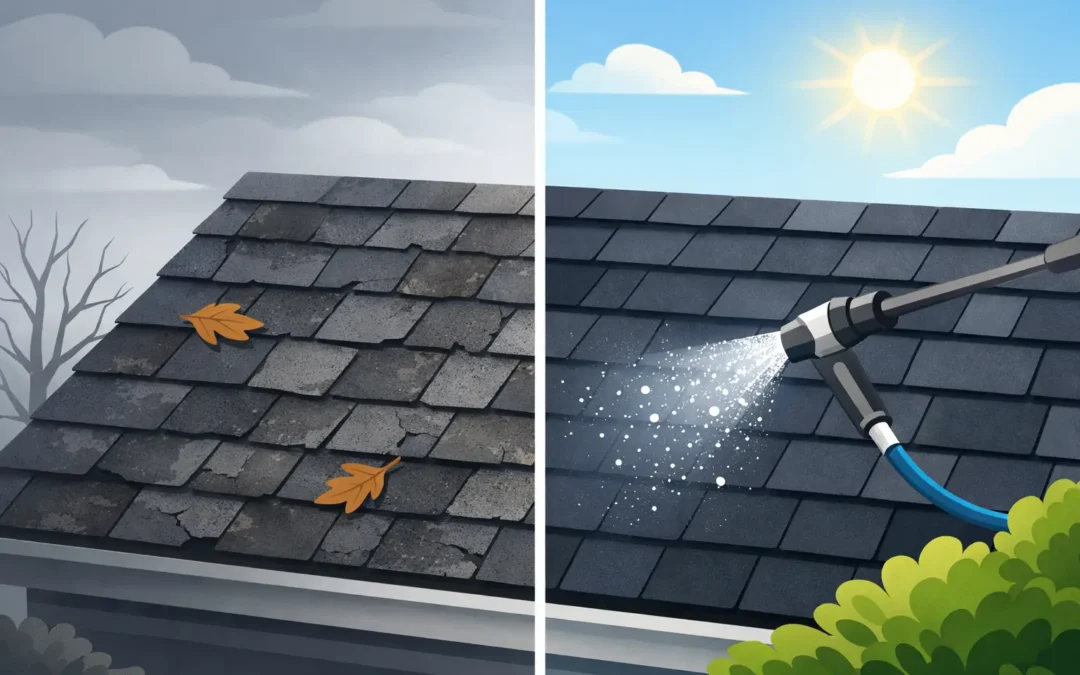
A roof can look tired long before it has reached the end of its useful life. Fading color, dry-looking shingles, and loose granules often lead homeowners to assume replacement is the only answer. But can old asphalt shingles be rejuvenated? In many cases, yes – provided the roof is still structurally sound and the treatment is applied at the right stage of aging.
Rejuvenation is not a cosmetic cover-up or a substitute for repairing serious roof damage. It is a restoration approach designed to address the drying and loss of flexibility that occur as asphalt shingles weather over time. For eligible roofs, it can be a practical way to preserve the roof you already own, improve its appearance, and postpone the major cost and disruption of a full replacement.
Why Asphalt Shingles Age Before They Fail
Asphalt shingles rely on oils and binders to remain flexible and help protect the roof from water, wind, and sun exposure. Year after year, heat, ultraviolet rays, rain, snow, and temperature swings gradually dry those materials out. The shingle becomes more brittle, its surface can appear faded, and protective granules may begin to shed.
This aging process does not always mean the roof is leaking or beyond repair. It often means the shingles need attention before small signs of wear turn into a replacement-level problem. Think of it as preserving an existing asset rather than waiting for it to fail.
The key distinction is between aging and damage. A weathered roof with intact shingles, sound decking, and no active leaks may be a strong candidate for restoration. A roof with widespread cracking, missing shingles, storm damage, rot, or compromised structure needs repairs or replacement first.
Can Old Asphalt Shingles Be Rejuvenated? It Depends on Condition
The right question is not simply how old the roof is. It is whether its core components are still capable of performing once the shingles regain conditioning and flexibility. A professional roof assessment should look beyond faded color alone.
A roof may be eligible for rejuvenation when shingles remain generally intact, the roof deck is stable, flashings are serviceable, and there are no unresolved moisture issues. Mild-to-moderate granule loss, surface dryness, and loss of visual uniformity can be signs that restoration may offer real value.
On the other hand, treatment should not be used to hide serious issues. Curled or badly fractured shingles, exposed fiberglass matting, extensive moss-related deterioration, active leaks, or widespread missing tabs call for a more substantial roofing solution. Honest evaluation protects the homeowner and ensures restoration is used where it can deliver measurable results.
Age still matters, but it is not a stand-alone verdict. A 12-year-old roof exposed to intense sun may show more wear than an 18-year-old roof in a milder environment. Installation quality, ventilation, local weather, tree coverage, and previous maintenance all influence whether rejuvenation is appropriate.
What Shingle Rejuvenation Is Designed to Do
Professional rejuvenation treatments are formulated to penetrate weathered asphalt shingles and replenish the conditioning properties lost through aging. Rather than coating the roof with a thick surface layer, the goal is to restore flexibility at a molecular level.
When applied to a qualifying roof, a biodegradable treatment can help shingles become more pliable, reduce ongoing granule loss, and revitalize the roof’s color and overall appearance. The visible improvement can be immediate, but the deeper value is helping the shingles better withstand the normal expansion, contraction, and weather exposure that contribute to premature failure.
That distinction matters. Paints and coatings may alter a roof’s appearance, but they can also trap moisture, change heat behavior, or create future maintenance concerns if they are not designed for asphalt shingles. A purpose-built rejuvenation treatment focuses on preserving the shingle’s existing function rather than covering it up.
The Restoration Process: Clean. Restore. Protect.
A quality restoration service begins with inspection and preparation, not a quick spray-and-go visit. The roof must be evaluated to confirm it is a suitable candidate, and any repair needs should be addressed before treatment.
The surface is then cleaned to remove debris and conditions that interfere with an even application. This step helps reveal the roof’s actual condition and prepares the shingles to receive the treatment properly. Cleaning should be performed with methods appropriate for asphalt shingles, not aggressive practices that can cause unnecessary granule loss.
Next, a trained applicator applies the rejuvenating treatment according to established coverage and safety standards. Proper application matters because coverage, weather conditions, roof pitch, and shingle condition all affect performance. Finally, the homeowner receives documentation of the completed work and warranty coverage when applicable.
Roof Shield works through certified applicators who are equipped to evaluate roofs, apply proprietary biodegradable treatment technology, and deliver a consistent restoration experience. That controlled process gives homeowners a more credible alternative to replacement-first recommendations.
The Financial and Environmental Value of Extending Roof Life
Replacing an asphalt roof is one of the larger maintenance expenses a homeowner can face. It can also involve scheduling challenges, noise, material delivery, cleanup, and the disposal of a substantial volume of old shingles. When a roof remains a viable candidate for restoration, rejuvenation can cost significantly less than replacement.
The savings are not just about delaying a purchase. A restored roof can help homeowners maintain curb appeal, protect property value, and plan future capital expenses on their own terms. Instead of replacing a roof because it looks aged, they can make a decision based on actual structural need.
There is an environmental benefit as well. Asphalt shingles make up a significant portion of construction waste when roofs are replaced prematurely. Extending the functional life of a roof means fewer materials headed to the landfill and fewer new roofing materials needed before they are truly necessary.
For homeowners who want practical sustainability, this is a meaningful choice. Preserving a serviceable roof is often the more responsible path when it can be done safely and effectively.
Questions to Ask Before Choosing Rejuvenation
Before moving forward, ask the provider to explain the roof’s present condition and why it qualifies for treatment. You should understand whether repairs are needed first, what results are realistic, how the product is applied, and what the warranty covers.
It is also smart to ask about the provider’s training and experience with asphalt shingle restoration. The quality of assessment and application directly affects the outcome. A certified professional should be comfortable telling you when rejuvenation is not the right fit.
Finally, compare the total value, not just the initial price. Replacement may be necessary for a failing roof, but it is not automatically the best response to every faded or weathered shingle. If restoration can safely preserve performance, improve appearance, and extend useful life, it deserves a place in the conversation.
An aging roof does not have to become an emergency or an automatic tear-off. Start with a professional evaluation, understand the condition beneath the surface, and choose the solution that protects both your home and your budget for the years ahead.