
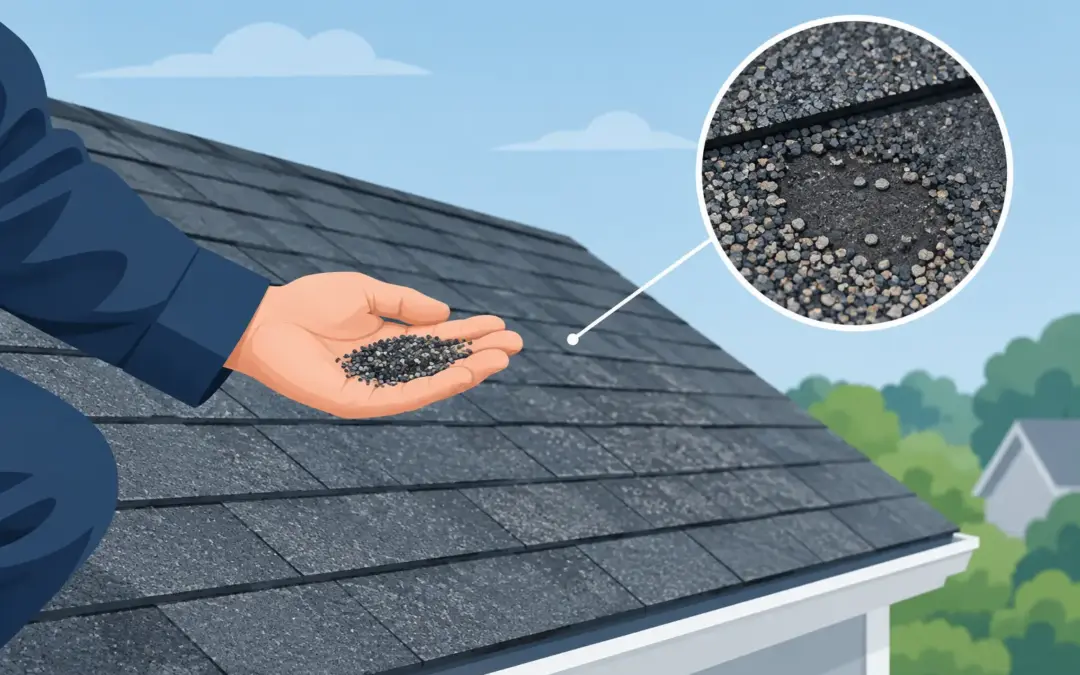
A handful of loose granules in a gutter is not automatically a roof emergency. But when granules keep collecting after rain, appear below downspouts, or expose darker patches on shingles, they are evidence worth investigating. Granule loss testing gives homeowners and roofing professionals a practical way to distinguish normal aging from a roof that may be moving toward reduced performance.
For asphalt shingles, granules do far more than create color and curb appeal. They protect the asphalt layer from ultraviolet exposure, help manage weathering, and contribute to the roof’s long-term durability. A smart assessment can clarify whether a roof needs monitoring, maintenance, restoration, targeted repair, or replacement.
What Granule Loss Testing Measures
Granule loss testing evaluates how readily protective mineral granules separate from asphalt shingles. The goal is not simply to count granules on the ground. A meaningful evaluation considers the condition of the shingles themselves, the pattern of loss across the roof, and whether the issue reflects normal weathering, localized damage, or broad material deterioration.
New roofs can shed some loose, excess granules after installation. That is usually temporary and should not be confused with meaningful aging. On an older roof, however, recurring granule accumulation may signal that the asphalt surface has dried, weathered, or lost some of the flexibility that helps it hold granules in place.
Testing is most useful when paired with a full visual roof assessment. A professional should look at the field of the roof, valleys, ridge areas, areas beneath trees, and slopes that receive the harshest sun exposure. Granule loss rarely tells the entire story by itself. Curling, cracking, bald spots, algae staining, storm impact, and shingle brittleness all add context.
Why Granule Loss Matters to Homeowners
Granules are the roof’s first line of defense against sunlight. As that protective layer thins, the asphalt beneath it can be exposed to more heat and ultraviolet radiation. Over time, this can accelerate drying and contribute to a cycle of greater brittleness and additional granule loss.
The practical concern is not that every worn-looking shingle requires immediate replacement. Many aging roofs remain structurally sound even when they need attention. The real risk is waiting until a manageable condition becomes a more expensive problem – such as leaks, widespread shingle failure, or the need for an unplanned replacement project.
Granule loss can also affect appearance. Uneven wear may leave a roof looking faded or patchy, diminishing curb appeal even before it reaches the end of its functional life. For homeowners planning to sell, refinance, or simply protect the appearance of their property, that visual change carries real value.
How Professionals Perform Granule Loss Testing
A responsible inspection starts on the ground and proceeds carefully. Safety comes first: walking an aging roof unnecessarily can cause damage or create risk. Qualified professionals can often identify significant concerns through close visual inspection, photographs, controlled sampling where appropriate, and an understanding of how shingles wear over time.
The process commonly includes documenting granule buildup in gutters and at downspout exits, then comparing that evidence with the roof’s visible condition. Technicians examine shingles for exposed asphalt, smooth or dark areas where granules are sparse, and loss patterns that repeat across a slope. They also look for concentrated wear around roof edges, valleys, vents, and other locations exposed to higher water flow or mechanical stress.
In more controlled product or laboratory settings, granule adhesion can be evaluated through standardized abrasion or agitation methods. These tests can be valuable for material development and quality control, but they do not replace a field assessment of a specific home. A roof’s condition depends on installation quality, ventilation, climate, sun exposure, storm history, and maintenance – not one number alone.
For a homeowner, the most valuable result is a clear explanation of what the observed loss means and what action makes financial sense. A good assessment should never rely on fear. It should connect the visible evidence to the roof’s present condition and available options.
What to Document Before an Inspection
Homeowners can make the evaluation more useful by noting when they first saw granules, whether the amount increased after a storm, and whether there are water stains or changes in attic conditions. Photos of gutter debris and affected roof areas can also establish a helpful baseline.
Avoid trying to scrape, rub, or pull granules from shingles yourself. That can worsen a vulnerable area and produce misleading results. The objective is to understand existing wear, not create a test condition that the roof would not experience naturally.
Reading the Results: Not Every Roof Has the Same Next Step
Granule loss testing should lead to a recommendation that fits the roof, not a one-size-fits-all sales pitch. In some cases, isolated loss points to localized repair needs. Hail strikes, falling branches, poor drainage, or installation defects can create patterns that differ from ordinary age-related wear.
If granule loss is widespread and shingles are severely cracked, missing, leaking, or structurally compromised, replacement may be the responsible choice. Restoration is not a cure for every roof condition, and homeowners deserve that honesty before investing in any service.
But there is an important middle ground. Many roofs show signs of aging, fading, dryness, and gradual granule loss while still having substantial useful structure remaining. When the roof is a good candidate, restoration can help address aging at the shingle level and delay a premature tear-off. That can mean lower immediate cost, less disruption around the home, and less roofing material sent to a landfill.
Roof Shield’s proprietary biodegradable treatment is designed for qualifying aging asphalt shingle roofs, helping restore flexibility at a molecular level while supporting improved shingle performance, color, and granule retention. The right candidate is identified through a professional evaluation, not a promise made from a driveway glance.
What Contractors Should Look for During Granule Loss Testing
For roofing and exterior-service professionals, granule loss testing is more than an inspection talking point. It is a way to build trust by helping customers understand the difference between a roof that is aging and one that has failed.
The strongest customer conversations begin with documented observations. Show the homeowner the gutter evidence, roof photographs, areas of fading, and any signs of cracking or exposed asphalt. Then explain the trade-offs in plain language. Replacement may be needed for a roof with severe damage. For a qualifying roof that is weathered but still serviceable, restoration may offer a more economical path forward.
This approach expands the conversation beyond replacement-only work. It gives contractors an opportunity to provide preventative, value-driven service to homeowners who are not ready for a full reroof but do not want to ignore the warning signs. It also encourages repeatable assessment standards across a team, protecting the customer experience and the business’s reputation.
A consistent inspection process should include photo documentation, age and condition review, ventilation observations, drainage checks, and a clear record of exclusions. That discipline supports accurate recommendations and makes it easier to explain warranty eligibility when applicable.
Protecting a Roof After the Assessment
Whether testing identifies minor wear or a more advanced condition, simple maintenance can help homeowners make better decisions over time. Keep gutters flowing, trim branches that rub against shingles, address moss or algae according to appropriate roofing practices, and inspect the attic for signs of moisture or ventilation concerns.
After major storms, check for sudden changes rather than assuming all granule loss is ordinary aging. A sharp increase in debris, new dark spots, torn shingles, or interior water staining deserves prompt professional attention. Early documentation can also be useful if insurance questions arise.
Most of all, treat granule loss as information, not a verdict. A roof does not have to look brand-new to keep protecting the home, and it does not have to fail before a homeowner explores a smarter option. A careful assessment creates the confidence to protect the roof asset at the right time, with the right solution.