
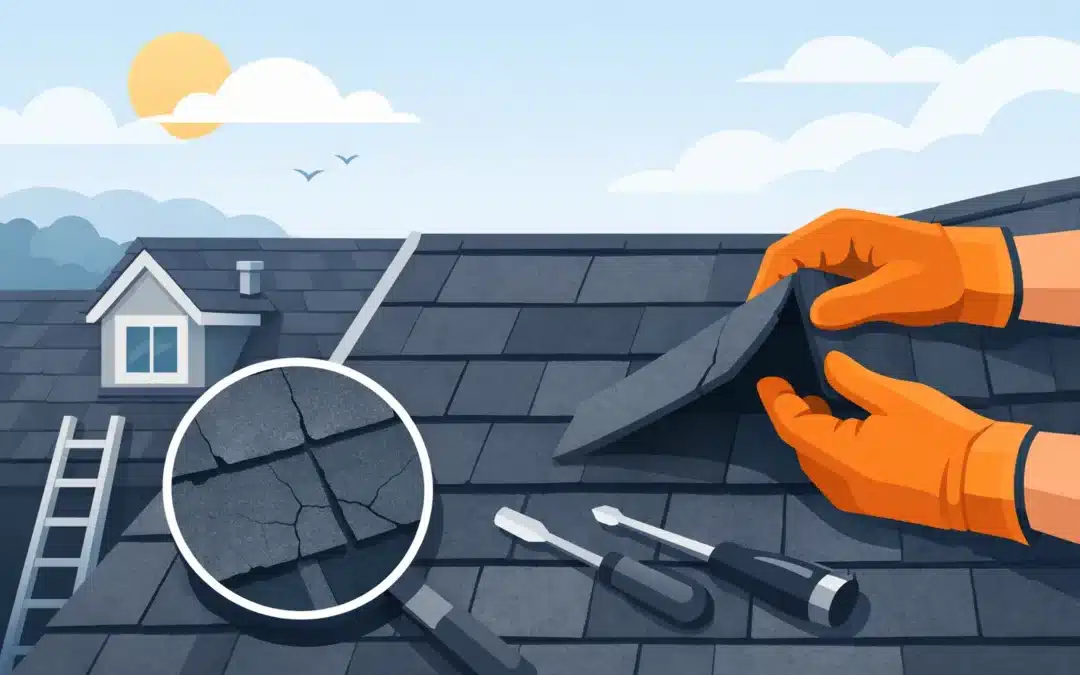
A roof can look acceptable from the driveway while its shingles are losing the flexibility needed to handle wind, temperature swings, and routine maintenance. Knowing how to assess shingle brittleness helps homeowners act before minor weathering turns into leaks, widespread granule loss, or an unnecessary replacement decision.
Brittleness is common on aging asphalt shingle roofs, particularly after years of UV exposure and seasonal heat. It does not automatically mean the roof has failed. But it does mean the roof deserves a careful, professional evaluation before anyone walks on it, pressure-cleans it, makes repairs, or recommends a replacement.
What Shingle Brittleness Really Means
Asphalt shingles are built to flex. Their asphalt layer, protective granules, and reinforcing mat work together to shed water while accommodating normal expansion and contraction. Over time, sun exposure oxidizes the asphalt oils that help shingles remain pliable. Heat accelerates the process, while cold temperatures can make an already-aged shingle even more fragile.
A brittle shingle may crack instead of bend. It can lose granules more easily when touched or exposed to wind. During repair work, nails and foot traffic that would be manageable on a newer roof can cause tabs to break. This is why a roof’s age alone is not enough to determine its condition. Two roofs installed in the same year can weather very differently based on ventilation, shade, climate, slope, installation quality, and maintenance history.
The goal is not to perform a risky test at home. It is to identify the signs that indicate whether the shingles may still be candidates for restoration and protection, or whether the roof has reached the point where replacement is the responsible choice.
How to Assess Shingle Brittleness Safely
Start from the ground with a clear view of each roof plane. Binoculars can help, but avoid climbing onto an aging roof to bend a shingle or pull at its edge. A simple flex test can crack a weakened tab, compromise its seal, and create a problem that was not there before.
Look for changes in surface texture and color
Healthy asphalt shingles have an even, granular surface. Aging shingles often develop a dry, faded, or rough appearance. Color variation is not always a concern, especially where trees create shade, but widespread dullness and an exposed-looking surface can signal oxidation.
Pay close attention to areas that receive the most direct sun, usually south- and west-facing slopes. If those sections look noticeably more worn than the rest of the roof, they may be losing flexibility faster. This difference is useful information for a certified roof professional because it helps pinpoint where weathering is most advanced.
Check for cracking, curling, and broken tabs
Visible cracking is one of the clearest warning signs. Look for horizontal splits across tabs, vertical cracks, fractured corners, or shingles that appear to have snapped at their edges. Curling and cupping can also accompany brittleness, although they may result from ventilation problems, moisture issues, or installation conditions.
A few isolated damaged shingles do not necessarily mean the entire roof is beyond repair. Storm impact, a fallen branch, or localized heat exposure can create isolated issues. Widespread cracking across several roof planes is more serious because it suggests the material itself is aging, not simply suffering from a single event.
Notice granules in gutters and at downspouts
Some granule shedding is normal, especially after a new roof is installed. On an older roof, however, repeated collections of coarse, sand-like granules in gutters or at downspouts can indicate the protective surface is wearing away.
Granule loss alone does not measure brittleness, but it often appears alongside it. As shingles dry out and weather, their surface can become less durable. Take note of recurring buildup after rain, not just one small collection after a major storm.
Inspect the attic and interior spaces
Brittleness begins at the roof surface, but attic conditions can influence how quickly shingles age. From inside the attic, look for signs of moisture staining, active leaks, mold-like growth, or daylight around roof penetrations. Also notice whether the attic feels excessively hot or poorly ventilated.
Poor ventilation does not always cause brittle shingles by itself, but trapped heat can accelerate asphalt aging. If the roof has interior moisture issues, those must be addressed before any restoration or replacement plan can provide lasting value.
Signs That Call for a Professional Roof Assessment
Homeowner observations are valuable, but a qualified evaluation brings the roof’s full condition into focus. A professional can inspect shingles closely without creating avoidable damage and can distinguish surface weathering from structural concerns.
Schedule an assessment when you notice four or more of these conditions:
- Cracking or fractured shingle tabs across multiple areas of the roof.
- Significant granule accumulation in gutters or at ground-level downspouts.
- Dry, faded shingles with uneven texture or exposed-looking asphalt.
- Curling, cupping, lifted edges, or shingles that no longer lie flat.
- Missing shingles, damaged flashing, soft roof decking, or signs of a leak.
- A roof nearing the later portion of its expected service life with no recent inspection.
A dependable assessment should look beyond the shingles. It should account for roof age, deck condition, ventilation, flashing, penetrations, existing repairs, storm damage, and active water intrusion. This complete picture prevents a replacement-first recommendation based solely on appearance.
Brittleness Is Not the Same as Roof Failure
This distinction can save homeowners substantial money. Weathered shingles may be brittle enough to need attention, yet the roof can still have sound decking, reliable flashing, and years of functional potential. In that situation, a restoration-focused solution may help preserve the existing roof instead of sending usable materials to a landfill prematurely.
On the other hand, no surface treatment should be used to cover up active leaks, widespread missing shingles, severe curling, compromised decking, major hail damage, or failed flashing. Those conditions require repair or replacement because the roof system itself is no longer reliably protecting the home.
The right answer depends on what is causing the roof’s visible aging. A professional should be able to explain that answer clearly: what is cosmetic, what is correctable, what must be repaired first, and why a specific recommendation fits the roof’s present condition.
When Restoration May Be Worth Considering
For an aging asphalt shingle roof with weathered but intact shingles, restoration can be a practical middle path between doing nothing and committing to a full replacement. Roof Shield’s proprietary biodegradable treatment is designed to rejuvenate aging shingles at a molecular level, helping restore flexibility, reduce future granule loss, and revive color when the roof meets treatment criteria.
The value is straightforward. Homeowners may extend the functional life of an existing roofing asset while avoiding the cost, disruption, and waste of premature replacement. A properly evaluated and treated roof can also improve curb appeal and provide warranty-backed confidence without the mess of a tear-off.
For roofing and home-services professionals, recognizing eligible roofs is equally valuable. Many customers are not ready for replacement, but they still need a credible solution for visible aging. Offering a restoration category creates a more complete conversation: clean where appropriate, repair what is damaged, restore qualifying shingles, and protect the customer’s investment.
Ask Better Questions Before Approving Work
Whether you are a homeowner or a contractor advising a customer, ask what the inspection found beyond surface appearance. Is there active water intrusion? Are the shingles intact enough for restoration? Is ventilation contributing to accelerated aging? Are repairs needed before treatment? What warranty coverage applies if the roof qualifies?
Clear answers help separate a thoughtful recommendation from a quick sales pitch. They also help homeowners compare the real cost of preserving an eligible roof against the immediate expense of replacement.
A brittle-looking roof is a signal to investigate, not a reason to panic. Document what you can see from the ground, avoid walking or flexing aged shingles, and have a certified professional evaluate the roof before the next repair, cleaning, or replacement decision.