
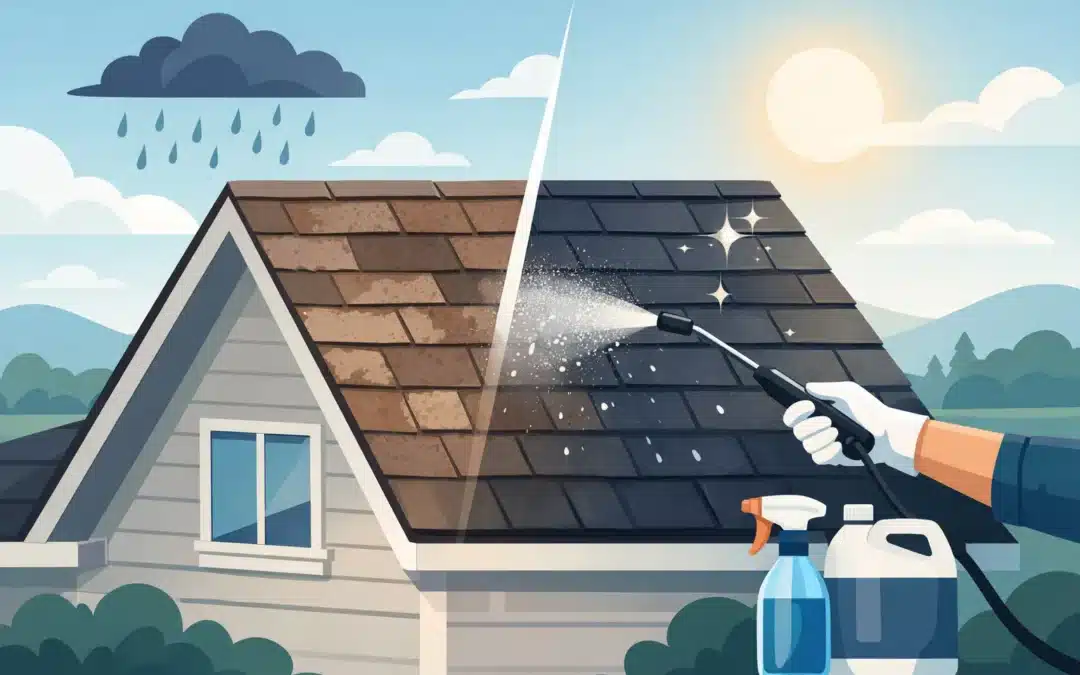
A roof does not have to be leaking to be aging. Asphalt shingles can become dry, brittle, faded, and increasingly prone to granule loss years before they reach the point of total failure. The right roof treatment for aging shingles can help homeowners address that middle stage – preserving a roof that is weathered but still structurally sound, rather than defaulting to an expensive replacement too soon.
For homeowners, that means a chance to protect a major asset, improve curb appeal, and avoid unnecessary disruption. For roofing professionals, it creates a valuable restoration service that solves a common customer problem: a roof that looks and performs older than it should, but does not yet require removal.
Why Aging Shingles Need More Than a Surface Fix
Asphalt shingles rely on oils and flexible compounds to withstand sun, wind, rain, and seasonal temperature changes. Over time, ultraviolet exposure and weather draw out those essential components. The shingle becomes harder and less flexible. Its surface may lose color, shed protective granules, and show signs of wear that make a homeowner worry about replacement.
Cleaning alone can improve appearance, but it cannot replenish what weather has taken from the shingle. Likewise, a cosmetic coating may change the surface look without addressing the underlying brittleness. A restoration treatment is designed for a different purpose: to penetrate aging asphalt shingles and restore flexibility at a molecular level.
That distinction matters. A roof is not simply a color or a curb-appeal feature. It is a protective system. When shingles retain flexibility, they are better positioned to handle normal expansion, contraction, and exposure without becoming prematurely fragile.
When Roof Treatment for Aging Shingles Is a Smart Choice
Treatment is not a substitute for proper repairs or a solution for every roof. It works best when a roof is showing normal age-related wear but remains a viable roofing system. A professional evaluation should confirm that the roof deck is sound, shingles are still in place, and there is no active issue that requires repair or replacement first.
Aging roofs are often strong candidates when shingles look dry or faded, granule loss is becoming noticeable, or the roof has lost its original visual depth. Homeowners may also notice shingles becoming less resilient after years of intense sun exposure. In these situations, a treatment can help restore the condition of the existing shingles and extend their functional life.
The practical benefit is timing. Instead of replacing a roof simply because it looks old, a homeowner may be able to preserve it for years longer. That can defer one of the largest exterior maintenance expenses a property owner faces while keeping usable roofing material out of the landfill.
A treatment may not be appropriate for roofs with widespread missing shingles, significant storm damage, advanced curling, compromised flashing, chronic leaks, or structural concerns. Those conditions call for a qualified roofing professional to identify the source of the problem and recommend repairs or replacement where necessary. The smarter decision is not always treatment. It is choosing the solution that matches the roof’s actual condition.
What a Professional Shingle Restoration Process Looks Like
A dependable restoration process begins with inspection, not application. A certified applicator evaluates the roof’s age, material condition, visible damage, and overall suitability. This protects the homeowner and ensures treatment is applied only where it can deliver meaningful value.
If the roof qualifies, the process generally follows four focused stages:
- Inspect. The applicator checks for repair needs, damaged areas, and conditions that could affect performance.
- Clean. The roof is prepared by removing debris and surface buildup so the treatment can reach the shingles consistently.
- Restore. A proprietary biodegradable treatment is professionally applied to rejuvenate weathered shingles, helping restore flexibility and revitalize color.
- Protect. The restored roof receives warranty-backed coverage when it meets program requirements, giving homeowners added confidence in the investment.
This approach is designed to be efficient and far less disruptive than a full tear-off. There is no pile of discarded shingles in the driveway, no major demolition process, and no need to replace a roof that can still serve the home.
The Value of Restoring Instead of Replacing
Roof replacement is essential when a roof has reached the end of its serviceable life. But replacement-first thinking can overlook the substantial value still present in aging shingles. If the roof is structurally sound and treatment-eligible, restoration offers a practical way to preserve that value.
The financial difference can be significant. Full replacement involves labor, disposal, materials, scheduling, and the disruption of a construction project. A professional roof treatment typically costs substantially less, giving homeowners a way to improve roof condition while protecting their maintenance budget for other needs.
There is also an environmental advantage. Millions of tons of roofing waste are sent to landfills each year. Extending the life of an existing asphalt shingle roof reduces premature tear-offs and makes better use of materials already installed on the home. It is a responsible choice that does not ask homeowners to compromise on performance or appearance.
Color restoration is another visible benefit. A faded roof can make an otherwise well-maintained home appear neglected. When the shingles are rejuvenated, the roof can regain richer color and a more uniform look, helping the property present better from the street without the cost of replacement.
Questions Homeowners Should Ask Before Choosing Treatment
Not every treatment product, application method, or provider offers the same level of quality control. Homeowners should ask whether the treatment is specifically formulated for aging asphalt shingles, whether the provider has been trained and certified, and whether the roof will be inspected before work begins.
Warranty terms deserve the same attention. A clear warranty signals that the provider stands behind the process and has standards for which roofs qualify. Roof Shield treatments are applied through a certified applicator network and include a five-year transferable warranty on qualifying roofs. That transferability can add practical value for homeowners who may sell their property during the coverage period.
It also helps to ask what the treatment is expected to do and what it cannot do. Honest answers build trust. A quality provider should explain that restoration can improve flexibility, reduce ongoing granule loss, refresh color, and extend functional roof life, while also identifying any repairs the roof needs first.
A Strong Opportunity for Roofing and Home Services Professionals
For contractors, aging shingle treatment fills an important gap between minor repair work and full replacement. Many customers are not ready for a new roof, but they are actively looking for a credible way to protect what they have. Offering restoration gives professionals a value-focused answer without forcing an all-or-nothing decision.
It also creates a differentiated service category. Rather than competing only on replacement estimates, certified applicators can offer a proprietary technology designed to deliver measurable homeowner benefits. Protected territories, training, operational support, marketing guidance, and lead-generation resources help qualified businesses build this service into a larger growth strategy.
The best contractor conversations are consultative. A homeowner deserves to know whether repair, restoration, or replacement is the right path. Providing that choice strengthens credibility, creates repeat opportunities, and positions the business as a long-term exterior care partner rather than a one-time installer.
Protect the Roof You Already Own
An aging roof should be evaluated before it is written off. If the shingles are still sound, professional restoration may provide a more affordable, lower-waste path to improved appearance and longer performance. A certified applicator can assess the roof, explain the available options clearly, and help turn a replacement concern into a practical maintenance decision.