
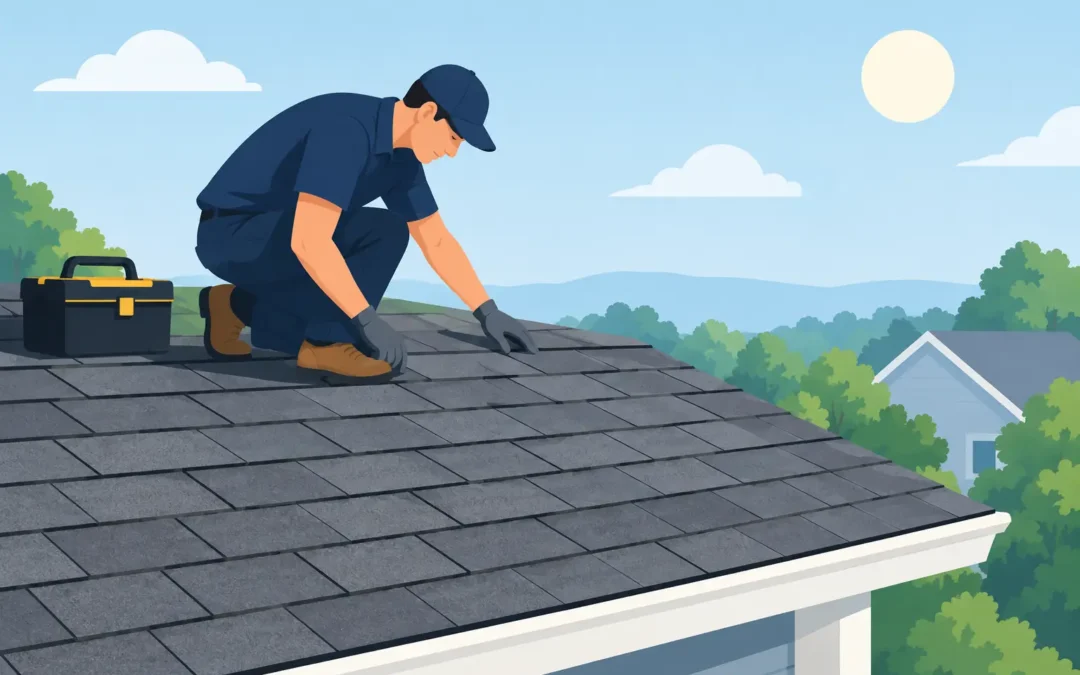
A roof rarely fails all at once. It usually sends warning signs first: brittle shingles, fading color, granules collecting in gutters, or a few lifted edges after a storm. Consistent asphalt roof maintenance gives homeowners a chance to address those changes before they become a disruptive, high-cost replacement project.
For an aging shingle roof, the goal is not to make it look new for a weekend. The goal is to preserve the roofing asset you already own. That means keeping water moving away from the roof, identifying damage early, and understanding when a weathered roof may be a candidate for restoration rather than immediate tear-off.
What Aging Asphalt Shingles Need
Asphalt shingles are built to manage years of sun, rain, wind, and temperature swings. Over time, however, ultraviolet exposure and weathering can draw out the oils that help shingles remain flexible. The surface may lose color, protective granules can shed, and the shingle can become more prone to cracking or curling.
Maintenance cannot reverse every form of roof damage. A roof with widespread missing shingles, active leaks from failed flashing, rotten decking, or storm damage needs a qualified roofing professional to diagnose and repair the underlying issue. But many roofs are replaced simply because they look tired or are beginning to show ordinary age-related wear. That is where a thoughtful maintenance plan can make a meaningful financial and environmental difference.
A replacement may still be the right answer, depending on the roof’s condition. The smarter decision starts with an honest assessment, not an automatic replacement recommendation.
A Practical Asphalt Roof Maintenance Schedule
Most homeowners do not need to climb onto their roof to care for it. In fact, walking on aging shingles can cause damage and create a serious fall risk. A visual check from the ground, plus professional inspections at the right times, is a safer and more effective approach.
Check the roof twice a year
Inspect the roof from the ground in spring and fall, using binoculars if needed. Look for areas that appear darker, wavy, bare, curled, or uneven. Pay particular attention to roof valleys, areas around chimneys and vents, and the edges near gutters. These sections handle concentrated water flow or are more exposed to wind.
After a major hailstorm or high-wind event, perform another visual check. A loose shingle tab or damaged flashing point may be small today, but it can become an entry point for water during the next heavy rain.
Keep gutters and roof drainage clear
Clogged gutters are more than a landscaping nuisance. When water cannot move through the gutter system, it can back up along the roof edge, saturate fascia materials, and contribute to moisture problems around the eaves.
Clear leaves, seed pods, and debris from gutters and downspouts as conditions require. Trim branches that touch or hang directly over the roof. This reduces debris buildup, limits abrasion during wind, and makes it harder for squirrels or other pests to access vulnerable roof areas.
Address moss and algae with the right method
Dark streaks on shingles are often algae, while thicker green growth may be moss. These conditions affect curb appeal, and moss can hold moisture against the roof surface. They should be addressed carefully.
Avoid aggressive pressure washing. High-pressure water can dislodge protective granules, force water beneath shingles, and shorten the service life you are trying to protect. Use roof-safe cleaning methods performed by trained professionals who understand asphalt shingle systems. The right approach depends on the roof’s condition, slope, surrounding landscape, and manufacturer guidance.
Watch what collects in the gutters
A small amount of granule loss is normal, especially on a newer roof. Large or increasing amounts of gritty material in gutters, however, deserve attention. Granules help shield the asphalt layer from sunlight and weather. Their loss can signal that the roof is aging and needs a professional evaluation.
Do not judge a roof’s condition on granules alone. Granule loss, discoloration, and shingle brittleness should be considered together with roof age, installation quality, ventilation, and any history of storm damage.
Four Signs It Is Time for a Professional Roof Assessment
A professional assessment can separate cosmetic aging from conditions that require repair or replacement. Schedule one when you notice any of the following:
- Shingles that are curling, cracking, lifting, or missing in multiple areas.
- Granules accumulating heavily in gutters or at the base of downspouts.
- Water stains in the attic, on ceilings, or around exterior walls.
- A roof that looks faded and weathered but has no obvious structural failure.
The last point is often overlooked. A faded roof may still have useful life left, especially when shingles have become dry and less flexible rather than structurally unsound. A qualified professional can determine whether repairs, restoration, or replacement is the appropriate next step.
When Restoration Belongs in the Plan
There is a major difference between cleaning a roof and restoring an aging shingle. Cleaning removes surface contaminants. Restoration is intended to address the effects of weathering within eligible shingles, helping restore flexibility and support longer functional life.
Roof Shield’s proprietary biodegradable treatment is designed for qualifying aging asphalt shingle roofs that are weathered but not at the end of their serviceable condition. Applied by certified professionals, the treatment works at a molecular level to rejuvenate shingles, support adhesion of remaining granules, and revive roof color. For the right roof, it can offer a lower-cost, lower-waste alternative to premature replacement.
That distinction matters. Restoration is not a cover-up for leaks, damaged decking, or failed roof components. A responsible provider should inspect the roof first, identify necessary repairs, and explain whether the roof qualifies. Homeowners should also ask about application standards, warranty coverage, and what ongoing care is recommended after treatment.
For many households, the value is clear: preserve a functioning roof, avoid sending tear-off materials to a landfill before their time, and defer the cost and disruption of replacement. It is a practical decision that can also improve curb appeal.
Maintenance Mistakes That Can Shorten Roof Life
The wrong maintenance strategy can create the very damage it is meant to prevent. Pressure washing, harsh chemical use, and untrained foot traffic are common examples. So is waiting until an interior leak appears. By that point, water may already have traveled beyond the original entry point.
Another mistake is treating every visible roof issue as a replacement emergency. Replacement is essential when the roof has reached the end of its useful life or has sustained serious damage. But a replacement-first mindset can overlook repair and restoration options that may better fit the actual condition of the roof.
Homeowners should also avoid relying on appearance alone. A roof can look acceptable from the driveway while developing brittle shingles or weak flashing details. Conversely, a roof that looks faded may be a strong candidate for professional restoration. The condition beneath the surface is what drives the right recommendation.
Make Roof Care Part of Long-Term Home Planning
The most effective asphalt roof maintenance is scheduled, not reactive. Add a seasonal ground-level inspection to your home checklist. Keep gutters clear. Document storm events and any changes you see. When the roof begins showing its age, request an evaluation before a minor concern becomes a major expense.
A well-maintained roof protects more than the rooms below it. It protects the value of the home, the appearance of the property, and the budget you have set aside for future improvements. With the right professional guidance, an aging asphalt roof may have more life and more value left than it first appears.