
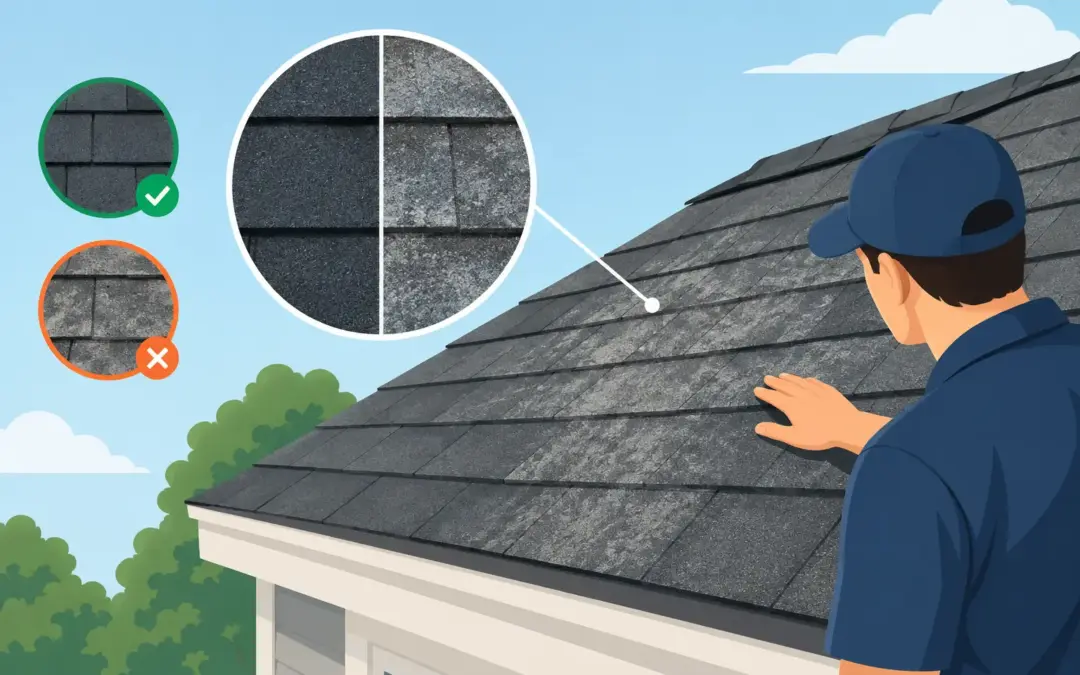
A roof can look merely faded from the driveway while its asphalt shingles are becoming dry, brittle, and less able to protect the home. Knowing how to spot roof oxidation helps homeowners act before a weathered roof becomes a replacement emergency. The goal is not to guess from one dark streak or a few loose granules. It is to recognize the pattern of aging, then determine whether the roof needs cleaning, restoration, repair, or replacement.
What Roof Oxidation Does to Asphalt Shingles
Asphalt shingles rely on oils and asphalt compounds to remain flexible and water-shedding. Over years of UV exposure, heat, rain, wind, and seasonal temperature swings, those compounds gradually break down. This aging process is commonly described as roof oxidation.
Oxidation does not usually create one dramatic failure overnight. It slowly changes the shingle’s condition. The roof may lose color, feel drier, shed more granules, and become more likely to crack or curl. South- and west-facing slopes often show these effects first because they receive the strongest sun exposure.
Not every old-looking roof is oxidized beyond recovery. Surface dirt, algae, and staining can make shingles appear worse than they are. That is why a careful visual review and professional assessment matter. The right decision depends on the roof’s age, shingle condition, leak history, ventilation, and structural integrity.
How to Spot Roof Oxidation From the Ground
Start with a safe inspection from the ground using binoculars or a camera with zoom. Do not walk on an aging shingle roof to investigate. Foot traffic can dislodge granules and damage brittle shingles, particularly in hot or cold weather.
Look for a dull, uneven appearance rather than consistent shingle color. Oxidized shingles often appear washed out, grayish, or patchy. The original color may still be more visible under eaves or in less sun-exposed areas, creating a noticeable contrast with the open roof field.
Pay close attention to widespread granule loss. Shingle granules protect the asphalt layer from sunlight. As they loosen, the roof can develop thin-looking areas or darker exposed patches. A small amount of granule loss is normal over time, especially after a new roof is installed or following a severe storm. The concern is a broad pattern of bare spots, changing texture, or heavy accumulation in gutters and at downspout exits.
Curling and cracking are stronger warning signs. Shingle edges may lift, corners may turn upward, or individual shingles may split. These issues can result from oxidation, but they can also point to poor attic ventilation, installation problems, or advanced age. Either way, they deserve prompt professional attention.
Signs That Are Often Mistaken for Oxidation
A roof does not need replacement simply because it has dark streaks. Those streaks are often algae growth, not oxidation. Algae affects appearance and can retain moisture, but cleaning may address it when the shingles remain intact and flexible.
Moss is another separate issue. It tends to grow in shaded, damp areas and can lift shingle edges if allowed to spread. Moss removal should be handled carefully because aggressive pressure washing can strip protective granules and shorten roof life.
Storm damage can also resemble aging. Missing tabs, sharp creases, isolated bruises, and sudden bare patches may be caused by wind or hail. Oxidation is generally more gradual and widespread, while storm damage may be concentrated along certain slopes or occur after a known weather event.
The distinction matters because each condition calls for a different response. Cleaning cannot restore dried-out shingles. Restoration is not a substitute for repairing active storm damage. And no treatment can correct a roof with serious leaks, rotten decking, or widespread shingle failure.
A Closer Look at Granule Loss and Brittleness
Granule loss is one of the most visible indicators of an aging roof, but it should be viewed in context. Check gutters after rain or have them inspected during routine maintenance. A few loose granules are expected. Large quantities that resemble coarse sand, especially alongside faded shingles and exposed asphalt, suggest the roof’s protective surface is wearing away.
Brittleness is harder for a homeowner to confirm safely from the ground. A qualified roofing professional can evaluate whether shingles still have useful flexibility or have become dry and prone to breakage. This is especially valuable when a roof is approaching the age at which replacement is commonly discussed but is not yet leaking or structurally compromised.
Color change can be another clue. As shingles age, UV exposure and oxidation reduce the depth and consistency of their color. The roof may look tired even after it is cleaned. While appearance alone does not determine performance, fading paired with granule loss and brittleness points to a more meaningful aging pattern.
When Roof Restoration May Be the Smarter Next Step
For an aging asphalt shingle roof that is still structurally sound, restoration can be a practical alternative to premature replacement. The right treatment is designed to address the dryness associated with weathered shingles, helping restore flexibility and improve the roof’s appearance without sending usable roofing materials to a landfill.
Roof Shield’s proprietary biodegradable treatment is applied by certified professionals to rejuvenate qualifying asphalt shingles at a molecular level. It is not paint, coating, or a cosmetic cover-up. When a roof meets treatment criteria, the process can help revitalize shingle color, reduce ongoing granule loss, and extend functional roof life with warranty-backed protection.
This approach is particularly valuable for homeowners who want to protect a major home asset while avoiding the cost, disruption, and waste of replacing a roof too soon. It can also give roofing and exterior-service professionals a differentiated way to serve customers whose roofs need more than cleaning but do not yet require replacement.
That said, restoration is not the answer for every roof. A roof with active leaks, missing shingles, widespread cracking, failed flashing, severe hail damage, or compromised decking should be repaired or replaced as needed. A reputable assessment should clearly identify those limitations before any service is recommended.
What to Ask During a Professional Roof Assessment
A useful inspection should go beyond, “Does the roof look old?” Ask whether the roof’s condition is consistent across all slopes, whether granule loss is isolated or widespread, and whether there are signs of moisture intrusion. You should also ask about attic ventilation, flashing, penetrations, gutters, and any evidence of prior repairs.
For a restoration evaluation, request a clear explanation of eligibility. The provider should identify why the roof qualifies or does not qualify, describe the preparation and application process, and explain the warranty terms. This gives homeowners a factual basis for comparing restoration with replacement rather than making a decision based only on appearance or fear.
Contractors considering a restoration category should apply the same standard. A credible offering starts with condition-based recommendations, trained application, quality control, and transparent customer expectations. That protects the homeowner and builds the trust that creates repeat business and referrals.
Act Before a Manageable Problem Becomes a Replacement Crisis
The best time to evaluate roof oxidation is when the shingles are showing age but still doing their job. Watch for widespread fading, increased granule loss, dry-looking surfaces, cracks, and curling, especially on the sunniest slopes. Then have a qualified professional determine whether the roof can be cleaned, restored, repaired, or needs replacement.
A proactive decision can preserve a serviceable roof, protect curb appeal, and reduce unnecessary material waste. When the roof is still a candidate for restoration, acting early may be the practical choice that keeps more value over your head and more money in your home-maintenance budget.