
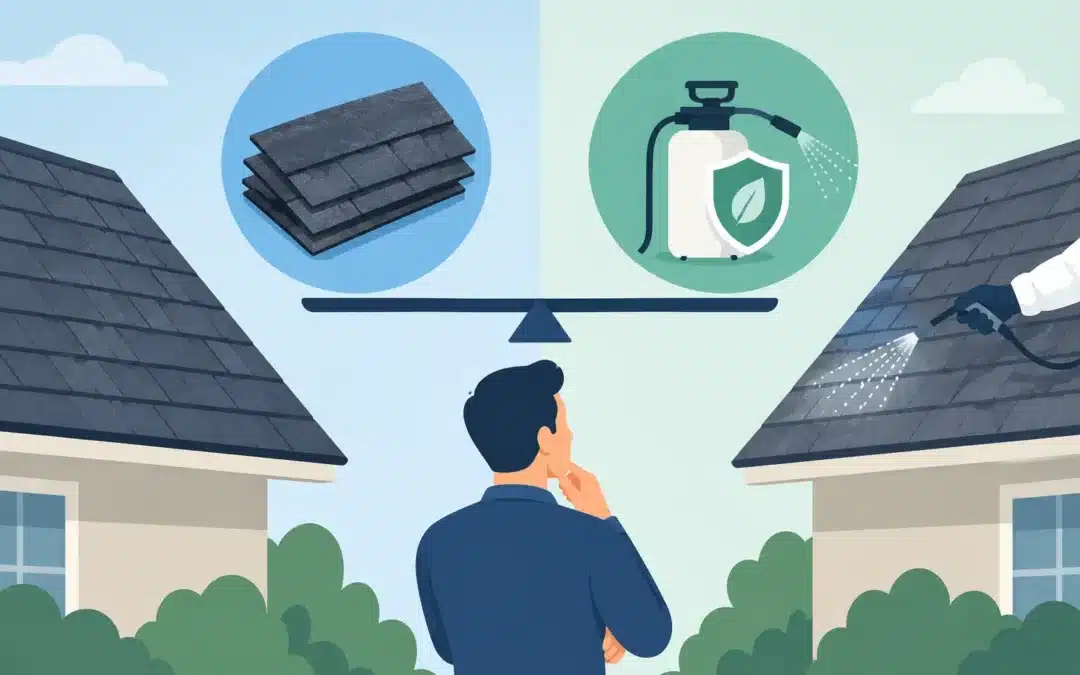
A roof does not need to be leaking to be aging. Fading color, loose granules in the gutters, and shingles that look dry or brittle can make homeowners assume replacement is the only responsible choice. But the decision between new shingles versus treatment is not simply about making a roof look better. It is about identifying whether the existing roof still has useful life worth protecting.
For many aging asphalt shingle roofs, a restoration treatment can be the practical middle ground between doing nothing and funding a full tear-off. The right answer depends on roof condition, not just roof age.
New Shingles Versus Treatment: Start With Roof Condition
A full replacement is the right investment when the roof system has reached the end of its functional life. Missing shingles, widespread cracking, active leaks, soft or damaged decking, failing flashing, and storm damage are not cosmetic issues. They require repair or replacement by a qualified roofing professional.
Treatment serves a different purpose. It is designed for aging asphalt shingles that remain installed, intact, and structurally sound but have begun to lose the flexibility and protective oils they need to perform well. Sun exposure, heat cycles, rain, wind, and time gradually dry out the asphalt in a shingle. As shingles become more brittle, they can shed granules faster and become more vulnerable to wear.
That distinction matters. Applying treatment to a failing roof is not a substitute for necessary repairs. Applying it to a roof with solid remaining structure can help preserve the asset before premature deterioration turns into a replacement project.
A qualified evaluation should look beyond surface color. The provider should assess shingle condition, granule loss, roof penetrations, flashing, moss or algae growth, ventilation concerns, and signs of water intrusion. Homeowners deserve a recommendation based on what the roof needs, not a replacement-first sales pitch.
When New Shingles Make More Sense
New shingles provide a complete reset. The old roofing material is removed, underlying areas can be inspected, and a new system is installed. That makes replacement the stronger choice when damage extends beyond the shingle surface or when the roof is too deteriorated to restore safely.
Replacement may also make sense for homeowners who are changing roofing style, preparing for a major exterior renovation, or seeking a different shingle type altogether. A new roof can provide peace of mind when it is truly necessary.
The trade-off is cost, disruption, and waste. Replacement often involves labor-intensive tear-off work, material delivery, noise, cleanup, and disposal of old shingles. It can also cost substantially more than a maintenance-focused restoration service. If the roof is still serviceable, replacing it early may mean discarding years of remaining functional life.
A replacement quote alone does not answer the question of whether replacement is needed now. It only shows what a replacement would cost.
When Treatment Can Be the Smarter Investment
A roof treatment is most compelling when a homeowner wants to extend the performance of an aging asphalt shingle roof without immediately taking on the cost and disruption of replacement. It is not paint, a coating that sits on top of shingles, or a cosmetic shortcut. A properly applied restoration treatment is designed to penetrate aging shingles and replenish flexibility at the molecular level.
That can help reduce brittleness, slow further granule loss, revitalize roof color, and support longer functional roof life. The visible improvement is valuable for curb appeal, but the larger benefit is preserving shingles that are still capable of protecting the home.
Roof Shield uses a proprietary biodegradable treatment applied by certified professionals. The process is built around a simple goal: Clean. Restore. Protect. After appropriate roof preparation, the treatment is applied evenly so the existing shingles can absorb the restoration technology. Eligible treated roofs are backed by a five-year transferable warranty, giving homeowners a clear measure of added confidence.
Treatment can be especially attractive in these situations:
- The shingles are weathered or faded but remain securely attached and generally intact.
- Granules are collecting in gutters, yet there is no widespread shingle failure or active leaking.
- The homeowner wants to postpone replacement while maintaining a more attractive, protected roof.
- The property is being prepared for sale and the owner wants to improve appearance without replacing a roof that still has usable life.
Every roof is different, and eligibility should always be confirmed through an inspection. Still, for the right roof, treatment can turn an expensive near-term replacement conversation into a practical preservation plan.
Compare the Real Cost, Not Just the Initial Price
Homeowners often compare a treatment estimate to a replacement estimate as though both services deliver the same thing. They do not. Replacement purchases a new roof system. Treatment seeks to extend the life of an existing roof system that remains viable.
That is why the best financial question is not, “Which option is cheapest?” It is, “What is the most responsible way to get the years of protection my roof can still provide?”
If a roof has substantial usable life left, treatment can cost far less than replacement while helping the homeowner defer a major capital expense. That flexibility can matter when balancing other home priorities, from HVAC upgrades to remodeling plans. It may also allow owners to plan for a future replacement on their schedule rather than reacting to a roof that was replaced too soon.
Conversely, treating a roof with serious defects can create a false sense of security and delay work that should happen immediately. A dependable provider will be candid about that. The value of restoration comes from applying it to the right roofs, at the right time.
Sustainability Is Part of the Decision
Asphalt shingles are durable, but once removed, they create a significant disposal challenge. Premature replacement sends usable material into the waste stream and requires new materials to be manufactured, transported, and installed sooner than necessary.
Extending the service life of an eligible roof is a practical form of sustainability. It helps homeowners get more value from materials already in place while reducing unnecessary tear-off waste. That does not mean replacement is environmentally wrong when a roof has failed. It means preservation deserves consideration before replacement becomes the default answer.
For property owners who want to make a more responsible maintenance decision, restoration offers a way to protect both the roof and the resources invested in it.
What a Credible Recommendation Should Include
A trustworthy roofing conversation should be clear about limits. If treatment is recommended, ask why the roof qualifies and what conditions were observed. Ask whether repairs or cleaning are required first, how the treatment is applied, what results are realistic, and what warranty protection applies.
If replacement is recommended, ask what evidence makes restoration unsuitable. Is there active water damage? Are shingles missing or fractured across large areas? Is the decking compromised? Specific answers help homeowners compare options with confidence.
For roofing and home-service professionals, this same clarity creates a powerful customer experience. Offering restoration does not replace replacement work. It adds a meaningful service category for customers whose roofs are aging but not yet failing. That creates an opportunity to solve more problems, build trust earlier in the roof life cycle, and stand apart from contractors who only offer a tear-off.
Preserve a Good Roof Before It Becomes a Bad One
The best time to evaluate a roof is often before a leak forces the decision. Waiting until shingles fail removes options and can turn manageable aging into emergency work. A professional assessment can determine whether repairs, treatment, or replacement will deliver the most value.
For homeowners with a structurally sound but visibly weathered asphalt roof, treatment may be the practical path forward: lower disruption, lower upfront cost, less waste, and more time from the roof already protecting the home. Start with the roof’s actual condition, then choose the solution that protects its remaining value.