
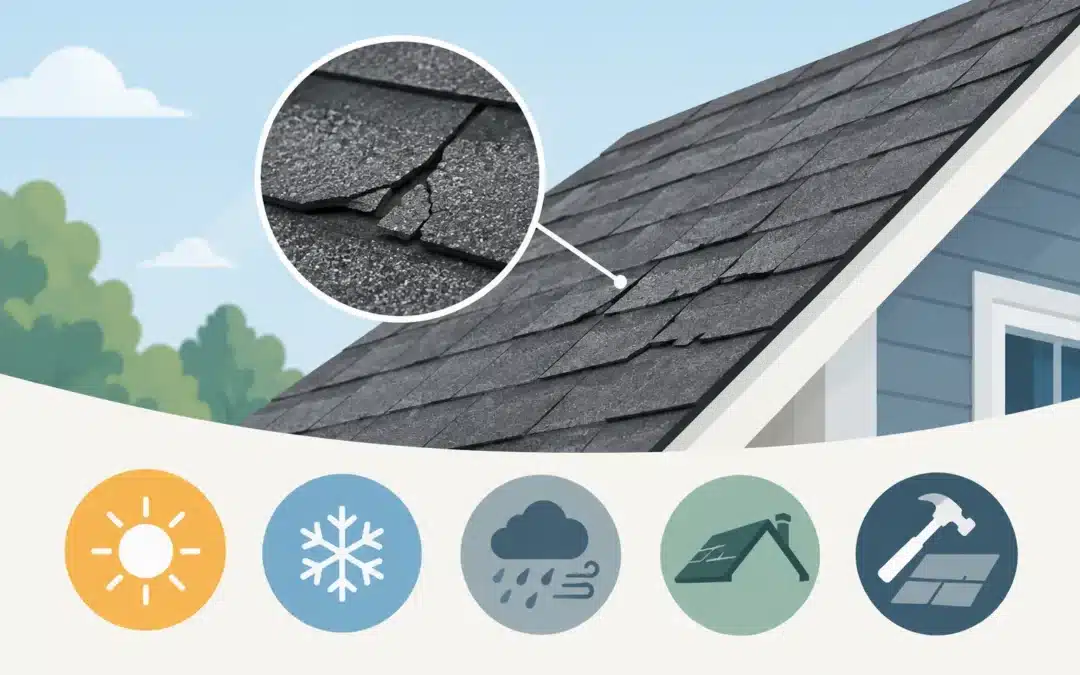
A roof can look acceptable from the driveway while its shingles are quietly losing the flexibility that helps them shed water and withstand weather. So, why do shingles become brittle? In most cases, it is the cumulative effect of sun, heat, weather exposure, and aging on the asphalt oils that keep each shingle pliable. Once those oils diminish, shingles are more likely to crack, shed granules, and fail under everyday stress.
For homeowners, brittleness is a warning sign worth addressing before a small maintenance issue becomes a replacement decision. For roofing professionals, it creates an opportunity to offer a better conversation than replacement-first advice: assess the roof honestly, restore what is still serviceable, and replace only when replacement is truly necessary.
Why Do Shingles Become Brittle Over Time?
Asphalt shingles are engineered as layered materials. A fiberglass mat provides structure, asphalt helps repel water, and protective mineral granules shield the surface from sunlight and physical wear. The asphalt component contains oils that contribute to flexibility. Those oils do not last forever.
Over years of exposure, the roof cycles through intense summer heat, freezing temperatures, rain, wind, and ultraviolet radiation. Each cycle puts pressure on the shingle. Heat can accelerate the loss of volatile oils, while UV exposure slowly degrades the asphalt binder at the surface. The result is a shingle that becomes dry, stiff, and less capable of flexing with normal roof movement.
Brittleness is not always a sign that a roof has reached the end of its life. It does mean the roof deserves a closer inspection. The right next step depends on the roof’s age, condition, installation quality, ventilation, and whether the shingles still have enough structural integrity to be preserved.
Sun and ultraviolet exposure
Sun exposure is one of the most consistent causes of shingle aging. UV rays break down the asphalt compounds that bind a shingle together, especially on roof slopes that receive direct afternoon sun. In warmer regions, the roof surface can become dramatically hotter than the outdoor air, accelerating this process season after season.
Granules are the first line of defense against UV exposure. As granules loosen and wash into gutters, more of the asphalt surface is exposed. That creates a cycle: reduced protection leads to faster drying, and faster drying can contribute to additional granule loss.
Heat, cold, and constant expansion
Roofs expand when they heat up and contract as they cool. That movement is normal, but aging shingles have less flexibility to accommodate it. A pliable shingle can move slightly without damage. A brittle shingle may crack at the edges, around nail locations, or when lifted by wind.
Cold weather often makes the problem more obvious. A shingle that has become dry and rigid can fracture when it is disturbed during a winter inspection, repair, or storm event. This is one reason experienced roofing professionals avoid treating every older roof as though it can be handled like a new installation.
Moisture, humidity, and poor ventilation
Water does not usually remove shingle oils by itself, but moisture-related conditions can speed up deterioration. Poor attic ventilation traps heat and humidity beneath the roof deck. That extra heat raises shingle temperatures from below, while moisture can contribute to deck issues, condensation, and shortened roof performance.
Algae, moss, and debris buildup can also hold moisture against the roof surface. Besides affecting curb appeal, they may prevent shingles from drying as quickly after rain. Proper roof cleaning and drainage matter because they help keep the roofing system working as designed.
Natural aging and oxidation
Every asphalt shingle roof ages. Oxidation occurs when asphalt is exposed to oxygen, heat, and sunlight over time. The material gradually becomes harder and less elastic. This is why a roof can remain watertight for years yet begin showing signs of surface fatigue, color fading, granule loss, and stiffness.
The pace of aging varies. A shaded roof in a mild climate may retain flexibility longer than a roof exposed to relentless sun, high winds, and large temperature swings. Product quality, installation practices, roof pitch, and attic ventilation all influence the timeline.
What Brittle Shingles Look Like
Brittleness cannot always be confirmed from the ground, but several visible clues can point to a drying roof. Homeowners may notice curled corners, cracked tabs, exposed fiberglass, bald patches where granules are missing, or a growing amount of gritty material in gutters and downspouts.
Color change can also tell part of the story. Fading does not automatically mean a roof is failing, but it often appears alongside weathering. If the roof looks dull, dry, or uneven compared with less-exposed sections, the shingles may be losing the protective qualities they once had.
A qualified assessment should go beyond appearances. The inspector should look for active leaks, soft or deteriorated decking, missing shingles, storm damage, flashing failures, and widespread cracking. A restoration approach is appropriate only when the roof remains fundamentally sound. It is not a substitute for correcting structural damage or a roof that has already failed.
Can Brittle Shingles Be Restored?
In many cases, aging asphalt shingles can be treated before they reach the point of replacement. The goal is not to disguise damage. It is to replenish flexibility in serviceable shingles, help reduce continued granule loss, improve color, and support a longer functional life for the existing roof.
A professional shingle restoration treatment works differently from a coating or cosmetic cleaner. Rather than creating a film over the roof, a specialized treatment is designed to penetrate the shingle and restore lost oils at a molecular level. When applied to a qualifying roof, this can help dry, weathered shingles regain pliability and improve their ability to withstand normal thermal movement.
Roof Shield provides a proprietary biodegradable treatment for aging asphalt shingle roofs through certified applicators. The process is built around a simple value proposition: Clean. Restore. Protect. For qualifying roofs, restoration can cost substantially less than full replacement, avoid the disruption of a tear-off, and keep usable roofing materials out of landfills.
That said, restoration is not a universal answer. Shingles that are severely cracked, missing, punctured, improperly installed, or attached to a compromised deck may require repair or replacement. A dependable provider will explain the difference clearly instead of applying a one-size-fits-all solution.
How to Slow Down Shingle Brittleness
You cannot stop the natural aging process entirely, but proactive maintenance can help prevent avoidable wear. Keep gutters clear so water moves off the roof efficiently. Remove branches and heavy debris that trap moisture or rub against shingles. Address algae or moss growth with roof-safe methods, not harsh pressure washing that can dislodge protective granules.
Attic ventilation deserves equal attention. A balanced system helps reduce excessive heat and moisture buildup beneath the roof deck. If upper rooms are unusually hot in summer, attic insulation and ventilation may be worth evaluating alongside the roof itself.
Most importantly, schedule an assessment when early signs appear. Waiting until water enters the home limits the available options and can turn a manageable restoration project into a larger construction expense. An inspection after a major storm, or as the roof approaches the middle to later stage of its expected life, gives homeowners better information and more control over their investment.
A Smarter Decision Than Waiting for Failure
Brittle shingles are a material warning, not an automatic replacement order. When a roof is still structurally sound, timely restoration may preserve the asset homeowners already own while improving appearance, flexibility, and long-term value. When the roof is beyond restoration, an honest evaluation helps ensure replacement happens for the right reason.
The practical next move is simple: do not judge your roof only by its age or by what is visible from the street. Have its condition assessed before the next season of heat, cold, and storms makes a dry shingle problem more expensive to solve.