
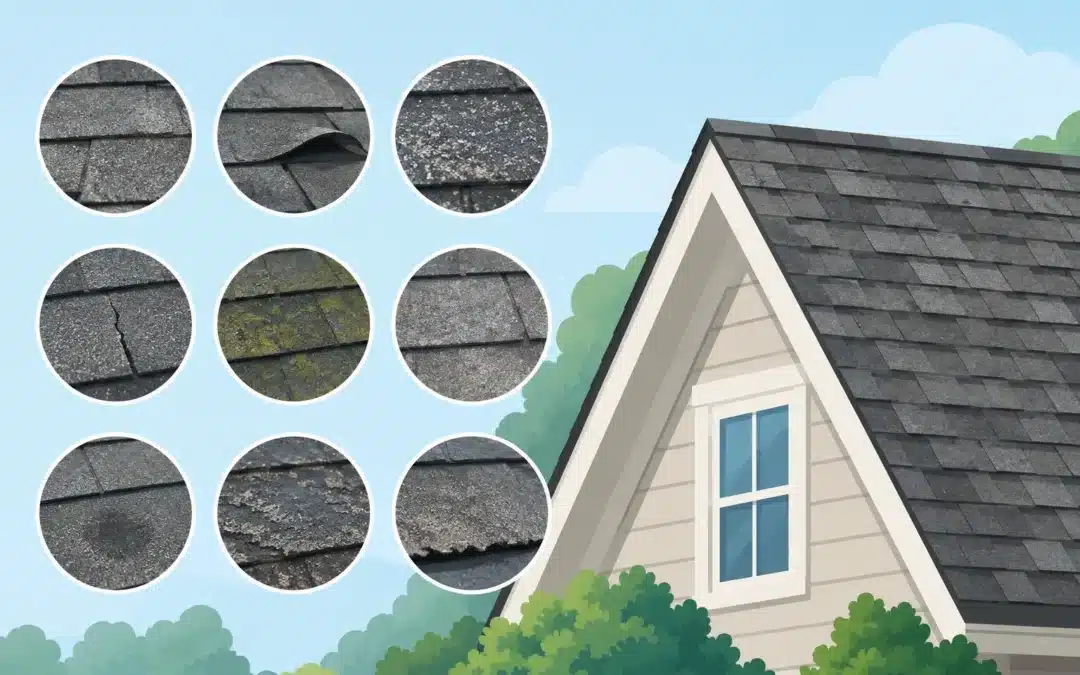
A roof rarely fails all at once. More often, it gives homeowners visible clues for years before a leak, insurance concern, or replacement quote forces a decision. Knowing the best signs of shingle aging helps you act while you still have options – whether that means maintenance, targeted repair, professional restoration, or replacement when the roof has reached the end of its serviceable life.
For asphalt shingle roofs, age is not measured by years alone. Sun exposure, heat cycles, ventilation, storm activity, installation quality, and local weather all affect how quickly shingles lose flexibility and protection. A 12-year-old roof in intense sun may show more wear than a 20-year-old roof in a milder, well-maintained setting.
The Best Signs of Shingle Aging to Watch For
1. Granules are collecting in gutters or at downspouts
Asphalt shingles are coated with mineral granules that help block UV rays and protect the asphalt layer underneath. A small amount of loose granule material can be normal, especially after a new roof is installed or following a major storm. Consistent buildup, however, deserves attention.
Look for coarse, sand-like particles in gutters, at the base of downspouts, or on walkways after rain. You may also see smoother, darker patches on the roof where granules have worn away. Once the asphalt is increasingly exposed to sunlight, shingles can deteriorate faster.
Granule loss does not automatically mean full replacement is necessary. The key is its extent and whether the shingles remain intact, flexible, and securely adhered. A qualified roof professional can distinguish normal weathering from a roof that has lost too much protective surface.
2. Shingles look faded, dull, or uneven in color
Fading is easy to dismiss as a cosmetic issue. Yet a roof that once had consistent color and now looks washed out may be showing the effects of long-term UV exposure and surface wear. This is particularly noticeable on roof planes that receive direct afternoon sun.
Color changes can also reveal uneven aging. A roof may appear darker in sheltered areas and lighter where sun exposure is strongest. Streaking from algae is a separate issue, but it can make a weathered roof look older than it is and hide other conditions beneath it.
Professional cleaning can address surface staining. If fading is paired with granule loss, brittleness, or curling, the larger concern is the shingles’ condition, not just curb appeal.
3. Shingle edges are curling, lifting, or cupping
A flat, properly installed shingle should lie close to the roof surface. When edges begin turning upward, corners lift, or the center of a shingle rises while edges remain down, the material may be reacting to moisture, heat, age, or poor attic ventilation.
Curling creates openings where wind-driven rain can work beneath the shingles. Lifted edges also make the roof more vulnerable during storms. In some cases, a localized repair can resolve the problem. Widespread curling across several roof sections usually signals that the roof needs a more complete evaluation.
Do not walk on curling shingles to inspect them. Aging asphalt can crack under foot traffic, turning a manageable condition into unnecessary damage.
4. Shingles have become brittle or show small cracks
Asphalt shingles rely on flexibility. Over time, the oils within the shingle can diminish, leaving the material dry, rigid, and more likely to fracture under wind, heat movement, or impact.
You may spot hairline cracking, broken corners, or cracks that run across individual shingles. These signs are especially common on sun-exposed slopes and roofs in regions with significant seasonal temperature swings. A brittle roof may still look generally intact from the street, which is why close professional inspection matters.
This is an area where condition matters more than appearance. A roof can be free of leaks today and still be losing the flexibility required to withstand the next severe weather event.
5. Missing tabs or damaged shingles appear after storms
Storm damage can happen at any roof age, but older shingles are less able to resist wind uplift and impact. If tabs are missing, edges have torn away, or several shingles are creased after a storm, the roof may be telling you it has become more vulnerable.
One missing shingle is not always a whole-roof problem. Multiple damaged areas, repeated repairs, or failures in different sections of the roof suggest that the underlying material may be aging beyond isolated fixes. Matching replacement shingles can also be difficult when the original color has faded.
Document storm-related changes with photos from the ground and have a roofing professional inspect the roof safely. Prompt attention can help prevent water from reaching underlayment, decking, or interior finishes.
6. The roofline looks uneven or feels soft in places
A roof should have clean, consistent planes. A visible dip, sag, or wavy area may indicate a problem below the shingles, such as moisture-damaged decking, structural movement, or inadequate support. Soft spots can also develop when water has been entering the roofing system over time.
This is not a condition to solve with a surface treatment alone. Any suspected decking or structural issue requires a thorough diagnosis and appropriate repair before considering restoration or other preservation options. The right solution protects the entire roofing system, not just what is visible from the driveway.
7. Moss, algae, or persistent debris is holding moisture
Dark streaks are often algae, while moss is thicker, green growth that can retain moisture against the shingle surface. Leaves and pine needles that stay trapped in valleys or behind roof features can do the same. These conditions may not cause immediate failure, but they can accelerate wear by keeping roof areas damp and obscured.
Gentle, roof-appropriate cleaning can improve appearance and allow a clearer inspection. Avoid aggressive pressure washing. It can dislodge granules, damage shingle edges, and shorten the remaining life of a roof that might otherwise be serviceable.
8. Flashing, vents, and penetrations show age around the roof
Many roof leaks begin at transitions rather than in the middle of a shingle field. Check the areas around chimneys, skylights, plumbing vents, walls, and valleys for cracked sealant, corroded flashing, loose materials, or exposed fasteners.
These details may age on a different timeline than the shingles. Replacing failed flashing or resealing a penetration can be a practical repair, especially when the shingles still have useful life. But if both the field shingles and roof details are deteriorating, it is time to assess the roof as a complete system.
9. Your energy costs or attic conditions have changed
Aging shingles are not always the direct cause of higher energy bills, but roof condition can work alongside attic insulation and ventilation problems. Excessive attic heat can accelerate shingle aging from below, while poor ventilation can contribute to moisture buildup and premature material breakdown.
Watch for unusually hot attic spaces, condensation, musty odors, or insulation that appears damp. These signs call for a professional review of ventilation, insulation, and roof integrity together. Replacing shingles without correcting the conditions that aged them prematurely can lead to the same costly cycle later.
When Aging Shingles May Be Candidates for Restoration
Not every aging roof needs immediate replacement. If shingles are still generally intact, attached, and structurally supported, restoration may offer a practical path to extend functional roof life. The best candidates are weathered roofs with signs of drying, fading, and early granule loss, but without widespread failure, active leaks, major curling, or compromised decking.
Roof Shield’s proprietary biodegradable treatment is designed to rejuvenate aging asphalt shingles at a molecular level, helping restore flexibility, reduce ongoing granule loss, and revive color. It is a different approach from covering up a problem. A certified applicator should first determine whether the roof has the sound underlying condition needed for treatment.
The trade-off is straightforward: restoration is not a substitute for necessary repairs or replacement. A roof with serious structural damage, extensive missing shingles, advanced leaks, or end-of-life deterioration needs the right corrective work first. For an eligible roof, though, restoration can reduce the expense, disruption, and landfill waste associated with premature replacement.
A Smarter Next Step Than Guessing From the Ground
Homeowners often wait for a leak because it feels like the clearest sign of roof trouble. By then, the cost may extend beyond shingles to insulation, decking, drywall, and personal belongings. A better approach is to schedule an evaluation when the first visible changes appear, while the roof may still be protectable.
Take note of where you see fading, granules, curling, or storm-related damage. Then ask a qualified professional to assess shingle condition, roof details, attic ventilation, and structural soundness together. A well-timed decision can preserve a valuable roofing asset, protect your home with confidence, and keep replacement on your schedule rather than the weather’s.