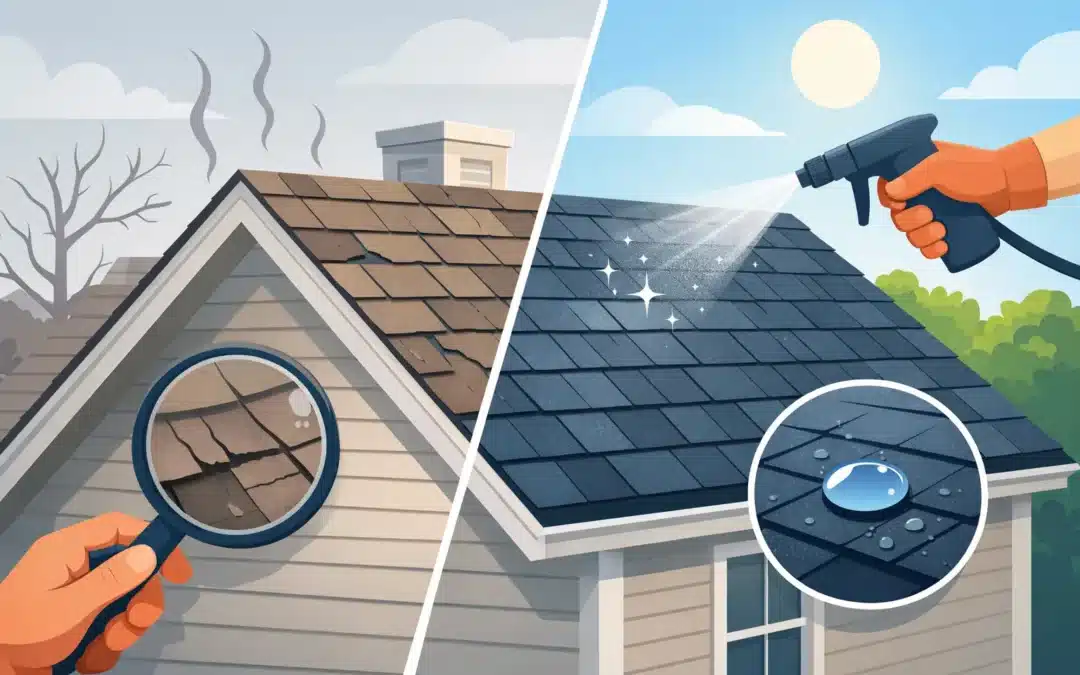
A roof can look faded, dry, and worn years before it reaches the point of failure. That gap is exactly why homeowners ask, does roof rejuvenation really work? For the right aging asphalt shingle roof, the answer is yes: a professionally applied rejuvenation treatment can restore lost flexibility, improve appearance, slow granule loss, and help postpone a costly replacement. But it is not a repair for every roof, and a credible answer starts with knowing the difference.
Roof rejuvenation is designed for shingles that are weathered but still structurally sound. It does not patch active leaks, replace missing shingles, correct poor installation, or solve damage caused by a failing roof deck. When the roof is a good candidate, however, restoration can be a practical way to protect an existing asset rather than replacing it before replacement is truly necessary.
What Roof Rejuvenation Is Designed to Do
Asphalt shingles contain oils that help keep them flexible and water-shedding. Years of sun exposure, heat cycles, rain, wind, and cold weather gradually dry those oils out. Shingles can become brittle, lose surface granules more easily, curl at the edges, and take on a dull, uneven color.
A quality rejuvenation treatment is applied to the shingle surface and formulated to penetrate the aging asphalt. The goal is to replenish flexibility at a molecular level, helping conditioned shingles perform more like they did earlier in their service life. The visible result can include richer color and a more uniform appearance. The functional result is more valuable: shingles may be better able to withstand everyday expansion, contraction, and weather exposure without becoming increasingly brittle.
That matters because roof aging is not always an all-or-nothing event. Many roofs are retired because they look old or because early signs of dryness are mistaken for end-of-life failure. In reality, a roof that is intact, dry underneath, and free from major defects may still have useful life worth preserving.
Does Roof Rejuvenation Really Work? It Depends on the Roof
The strongest results come from matching the treatment to the condition of the roof. Rejuvenation is a preservation service, not a shortcut around legitimate roofing repairs. A professional evaluation should determine whether the shingles have enough integrity for restoration to make sense.
A good candidate often has weathered asphalt shingles with fading, minor granule loss, or early brittleness, but no widespread cracking, exposed fiberglass mat, serious curling, or active water intrusion. The roof should also have sound decking, functioning ventilation, and flashings that are in good condition or can be repaired separately.
A roof may need replacement instead when there is extensive storm damage, large areas of missing shingles, widespread shingle fractures, sagging, soft decking, recurring leaks, or major installation defects. Applying any restorative treatment over those conditions would not protect the home or provide real value.
This is why the inspection matters as much as the treatment. A trustworthy provider should be willing to say when rejuvenation is not the right answer. Homeowners deserve a recommendation based on the roof’s actual condition, not a replacement-first sales script or a one-size-fits-all coating solution.
What Results Can Homeowners Expect?
When applied to a suitable roof, rejuvenation can create both immediate and long-term value. Color often improves as the shingles absorb the treatment, helping an aging roof look more cared for without the disruption of a tear-off. More importantly, restoring shingle flexibility can help reduce the rate at which a dry, brittle roof continues to deteriorate.
The financial benefit is straightforward. Full roof replacement can be one of the largest maintenance expenses a homeowner faces. If a treatment helps extend the functional life of an existing shingle roof, it gives the homeowner more time before making that capital decision. That can be especially meaningful for owners planning to sell, managing several properties, or simply trying to maintain a home responsibly without replacing materials that still have life left in them.
There is also an environmental advantage. Roof replacement creates substantial tear-off waste, much of which ends up in landfills. Preserving serviceable shingles reduces unnecessary disposal and makes better use of the materials already on the home. Clean. Restore. Protect. is not just a better-looking approach – it can be a more responsible one.
Results will vary based on shingle age, climate, roof pitch, sun exposure, ventilation, and prior maintenance. A south-facing roof in a hot climate may weather differently from a shaded roof in a milder region. That is another reason a professional assessment should come before a price quote.
Why Treatment Quality and Application Matter
Not every product marketed as a roof treatment works the same way. Some roof products are surface coatings intended to change the appearance of a roof. Others may be cleaning solutions that remove staining but do not address dry, aging asphalt. True rejuvenation is a different category: it focuses on conditioning the shingles themselves.
The treatment formula, surface preparation, application rate, and technician training all affect performance. An uneven application can produce uneven results. Applying product to a roof with unresolved defects can create false confidence. Using a treatment that is not designed for asphalt shingles can introduce risks rather than solve problems.
Roof Shield uses a proprietary biodegradable treatment and a certified applicator model to bring more consistency to the process. Certified professionals evaluate roof eligibility, prepare the surface, apply the treatment according to established standards, and help homeowners understand what the service can and cannot do. This level of quality control is essential when a homeowner is making a decision about a major part of the property.
For homeowners, the practical takeaway is simple: ask what the treatment is designed to do, how the roof will be evaluated, and what warranty coverage applies. A provider should be able to answer directly, without vague promises about making an old roof “new” again.
How to Tell Whether Your Roof May Be a Candidate
A visual review can reveal whether it is time to schedule an assessment. Look for these common signs that a roof may be aging but potentially restorable:
- Fading or uneven shingle color caused by years of UV exposure
- A dry, weathered appearance without widespread cracks or exposed matting
- Minor granule loss, especially in gutters, without bare patches across the roof
- Shingles that remain generally flat and intact, with no significant lifting or curling
- No interior water stains, active leaks, soft spots, or signs of deck movement
These signs do not replace a roof inspection. They simply help distinguish normal aging from more serious failure. A contractor should inspect penetrations, valleys, ridge areas, flashing, drainage paths, ventilation, and the roof’s underside where accessible. The goal is to protect the homeowner from spending money on a treatment when repair or replacement is the safer choice.
A Smarter Conversation Than “Repair or Replace”
For decades, the roofing industry has pushed homeowners toward a narrow choice: repair a small problem or replace the entire roof. Rejuvenation adds a useful middle path for qualifying asphalt shingle roofs. It is not a substitute for craftsmanship or honest roofing advice. It is a restoration option for roofs that are aging, not failing.
That distinction also creates an opportunity for roofing and home-services professionals. Offering a proven restoration category allows a business to serve customers who are not ready for replacement but still want meaningful protection and visible improvement. It can create a differentiated service, strengthen customer relationships, and provide a more complete solution than replacement alone.
The best next step is not to assume your roof is too old or too far gone based on appearance alone. Have its condition evaluated by a qualified professional who can tell you whether the shingles need repair, replacement, or a chance to be restored. When the roof qualifies, rejuvenation can be a practical investment in more years of protection, better curb appeal, and less waste.