
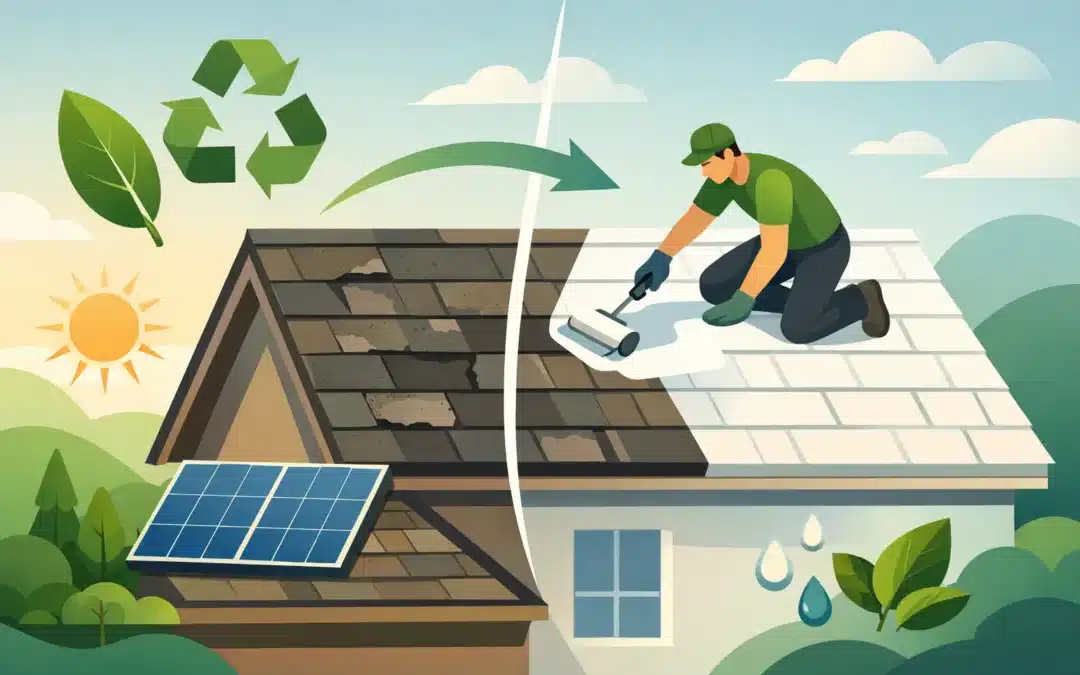
A roof can look tired long before it has reached the end of its useful life. Faded color, dry-looking shingles, and granules collecting near downspouts often lead homeowners to assume replacement is the only answer. But an eco friendly alternative to roof replacement may be available when the roof structure is sound and the shingles are aging rather than failing.
Roof restoration changes the conversation from replacement-first to preservation-first. Instead of removing a functional asphalt shingle roof and sending tons of material to a landfill, a qualified professional can evaluate whether treatment can help restore flexibility, improve appearance, and extend service life. The result can be a cleaner, more responsible path to protecting one of the largest assets on a property.
Why replacing a roof is not always the greenest first move
Full roof replacement is necessary when a roof has serious damage, widespread leaks, failed decking, major storm impact, or shingles that have become too brittle to perform. There is no treatment that should be used to hide structural problems or postpone a needed repair.
However, many aging roofs fall into a different category. They are still keeping water out, but years of ultraviolet exposure, heat cycles, rain, and wind have depleted the oils that help asphalt shingles remain flexible. As shingles dry out, they can lose granules more quickly, become less resilient, and appear worn before their functional life is truly over.
Replacing those roofs prematurely comes with a material cost that is easy to overlook. Old asphalt shingles are heavy, bulky, and commonly removed by the truckload. While recycling options exist in some areas, much of that material still ends up in landfills. Manufacturing and transporting new roofing materials also requires energy and resources.
Preserving a roof that can safely remain in service reduces waste at the source. It also avoids the disruption of a tear-off, including noise, debris, landscaping concerns, and the logistics of a large construction project. Sustainability is not only about choosing new materials with greener labels. It is also about getting more useful life from the materials already on your home.
How an eco friendly alternative to roof replacement works
A quality shingle restoration process begins with an honest assessment. The purpose is not to treat every roof. It is to identify roofs with aging asphalt shingles that are still viable candidates for preservation.
When a roof qualifies, the process typically starts with cleaning. Removing surface contaminants, algae, moss, and accumulated debris helps reveal the roof’s condition and prepares it for treatment. Cleaning must be completed carefully, since aggressive methods can damage aging shingles or force water beneath them.
Next, a biodegradable restoration treatment is professionally applied to the shingles. Roof Shield’s proprietary technology is designed to penetrate weathered asphalt shingles at a molecular level, helping restore lost flexibility and support the roof’s protective performance. As shingles are rejuvenated, homeowners may see richer color, a more uniform appearance, and reduced visible signs of weathering.
The goal is not to make a failing roof look new. The goal is to help a qualifying roof perform longer, with less waste and substantially less expense than an immediate replacement. A five-year transferable warranty can also provide meaningful confidence for homeowners who want documented value and added peace of mind.
The financial value of restoration
A roof replacement is one of the largest maintenance investments a homeowner can face. Costs vary widely based on roof size, pitch, materials, access, local labor, and necessary repairs. Even a straightforward replacement can be a significant unplanned expense.
Restoration offers a different way to manage that investment. By extending the functional life of a suitable roof, homeowners may be able to delay replacement until it is truly required. That can free up budget for other priorities, such as HVAC upgrades, insulation, windows, emergency savings, or planned home improvements.
Delaying replacement does not mean ignoring maintenance. It means making a more informed decision based on the roof’s actual condition. A restoration-minded approach pairs well with periodic inspections, clear gutters, prompt minor repairs, and attention after severe weather. These practical steps protect the value created by treatment.
There is also curb appeal to consider. A faded, streaked roof can make an otherwise well-maintained home appear older than it is. When restoration improves color and reduces the weathered look of shingles, homeowners can refresh the exterior without the cost, waste, and disruption of a full tear-off. That can be especially valuable before listing a home or completing other exterior improvements.
When roof restoration is a strong fit
The best candidates are asphalt shingle roofs showing age-related wear but retaining sound overall construction. A professional evaluation should look beyond surface appearance. The roof needs to be assessed for active leaks, missing shingles, storm damage, flashing condition, sagging areas, soft decking, and the degree of shingle deterioration.
Restoration may be worth considering when shingles are dry, faded, or beginning to shed granules, yet remain largely intact and the roof is still doing its primary job of shedding water. It may also make sense for homeowners who want a lower-waste option and are not ready to commit to a replacement project.
A roof should be repaired or replaced instead when defects compromise its ability to protect the home. Widespread curling, extensive cracking, severe granule loss, persistent leaks, significant hail damage, or structural concerns are signs that preservation may not be the right path. A dependable provider will explain that distinction clearly rather than treating restoration as a one-size-fits-all solution.
What homeowners should ask before choosing treatment
The quality of the evaluation and application matters as much as the treatment itself. Homeowners should ask whether the provider is trained and certified, how the roof will be cleaned and prepared, what conditions would disqualify the roof, and what warranty coverage applies.
It is also smart to ask for a straightforward explanation of expected outcomes. A credible provider will describe restoration as life extension and protection for qualifying shingles, not a permanent substitute for every future roof replacement. They should be able to identify needed repairs before treatment and explain how maintenance can help preserve the result.
The most useful question may be the simplest: Is this roof truly a candidate for restoration? An honest answer protects the homeowner, the provider, and the long-term value of the property.
A growth opportunity for roofing professionals
For roofing and home-service businesses, roof restoration creates an opportunity to serve customers who are not ready for replacement but still need a meaningful solution. Traditional roofing models often leave a gap between minor repair work and a full tear-off. Restoration fills that gap with a high-value service that addresses aging shingles, homeowner budgets, and environmental concerns at the same time.
This is not a replacement for replacement work. It is an additional category that helps contractors offer the right recommendation for more roof conditions. A customer who cannot justify a new roof today may be an excellent candidate for a certified restoration service. That creates a better customer experience while opening new revenue opportunities for businesses willing to lead with education and condition-based recommendations.
For applicators, proprietary technology, protected territory access, operational guidance, and marketing support can help turn that service into a differentiated offering. The strongest businesses will be those that explain the choice clearly: clean, restore, protect when the roof qualifies, and replace when replacement is truly necessary.
Preservation is a practical environmental decision
Homeowners do not need to choose between protecting their budget and making a more responsible decision for the environment. When an aging asphalt shingle roof is structurally sound, restoration can reduce unnecessary landfill waste, preserve existing materials, and postpone the resource demands of a replacement project.
The next time a roof starts showing its age, look beyond the default recommendation. A careful inspection can reveal whether preservation is still possible – and whether a smarter, lower-waste solution can keep the roof protecting the home for years to come.