A roof can look faded, dry, and worn long before it is ready for the landfill. That is why shingle rejuvenation reviews deserve more than a quick glance at star ratings. The most useful reviews explain the roof’s condition before treatment, what changed afterward, who performed the work, and whether the homeowner received clear warranty coverage.
For homeowners, rejuvenation can be a practical way to protect an aging asphalt shingle roof without taking on the disruption and cost of an immediate replacement. For roofing professionals, it can be a differentiated restoration service that creates value for customers whose roofs are weathered but still structurally viable. The key is knowing what credible feedback looks like and when restoration is the right fit.
What Shingle Rejuvenation Reviews Should Tell You
A strong review does not simply say that a roof “looks better.” Appearance matters, especially when fading and granule loss affect curb appeal, but the real purpose of a quality rejuvenation treatment is to help aging shingles regain flexibility and resist further drying and wear.
Look for reviewers who describe the condition of the roof before application. Was the roof brittle, faded, or showing early granule loss? Had it been inspected for leaks, damaged flashing, missing shingles, or other repair needs? Rejuvenation is designed for aging asphalt shingles that remain fundamentally serviceable. It is not a cover-up for active leaks, widespread storm damage, failing decking, or a roof at the end of its usable life.
The most credible reviews also set reasonable expectations. Homeowners may report richer color, improved flexibility, and a more uniform appearance after treatment. Those results can be meaningful, but the treatment does not turn an old roof into a new one. It restores and protects an existing roofing asset when the roof qualifies for restoration.
Read Beyond Before-and-After Photos
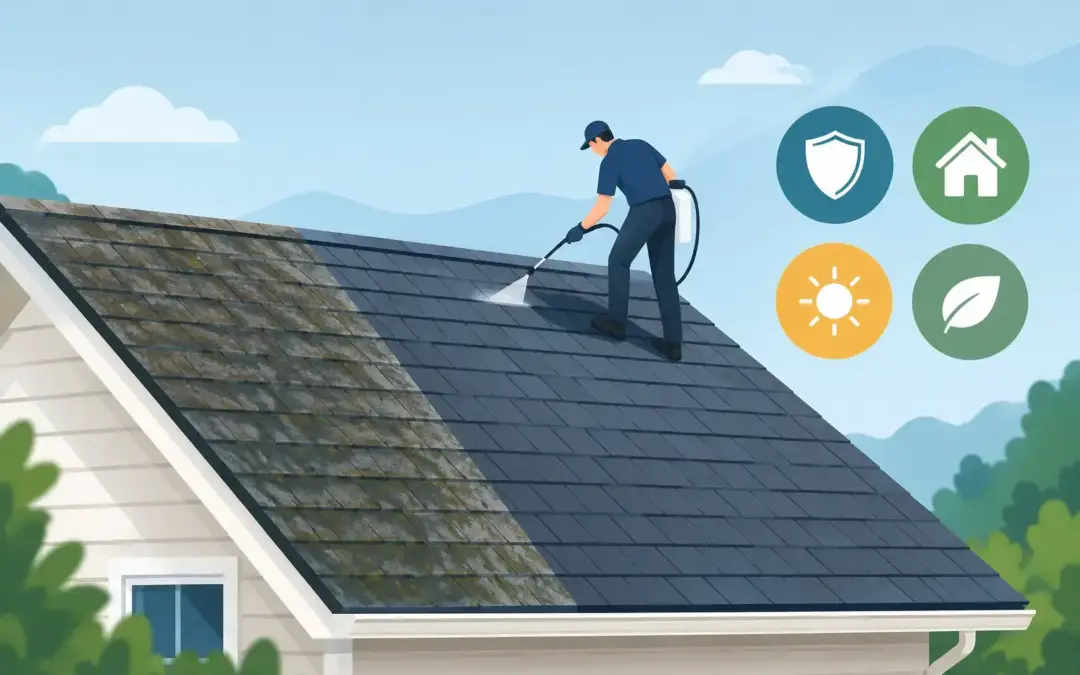
Before-and-after images are useful because color restoration can be highly visible. Still, photos alone cannot tell you whether the job was properly evaluated or applied. A roof can photograph well from the street while hiding conditions that require repair or replacement.
Read for details about the process. Did the provider inspect the roof first? Was the roof cleaned and prepared as needed? Did the homeowner understand what the treatment could and could not address? A professional applicator should be direct about eligibility, not eager to treat every roof regardless of condition.
Reviews become more valuable when they mention communication. Homeowners should know when the crew will arrive, how long the work is expected to take, what areas need to be protected, and how the treatment will be applied. A clear process builds confidence because roof restoration is a technical service, not a cosmetic spray-and-go job.
The Questions Behind a Five-Star Rating
A five-star rating is encouraging, but ask why the customer gave it. The best feedback often answers practical questions such as:
- Did the provider explain whether restoration was appropriate for the roof?
- Was the price clearly compared with the cost and disruption of replacement?
- Did the crew protect the property and leave the site clean?
- Was the homeowner given written warranty information and post-service guidance?
When a review includes these details, it speaks to workmanship and customer care rather than first impressions alone.
Results Depend on Roof Condition
No honest discussion of shingle rejuvenation reviews should ignore the condition of the roof. Asphalt shingles age differently depending on sun exposure, ventilation, climate, roof slope, installation quality, and maintenance history. Two roofs installed in the same year can have very different restoration potential.
A roof with dry, weathered shingles and early signs of aging may be an excellent candidate. The treatment can replenish oils lost through exposure, helping restore flexibility at a molecular level while improving color and supporting longer functional life. This can help homeowners defer a premature replacement and avoid sending serviceable roofing material to a landfill.
However, a roof with extensive physical damage may need repairs first, or replacement may be the responsible recommendation. Curled or missing shingles, compromised underlayment, severe hail impact, major leaks, and structural issues are not problems a rejuvenation treatment is intended to solve. Reviews that praise a provider for recommending against treatment when it is not suitable can be just as reassuring as reviews celebrating a successful application.
Warranty Coverage Is Part of the Value
A rejuvenation review should make you curious about the warranty, not assume every warranty offers the same protection. Ask what is covered, how long coverage lasts, whether it transfers to a new homeowner, and what maintenance or roof-condition requirements apply.
Warranty terms matter because they show that a company stands behind both its technology and its application standards. Roof Shield supports qualified treated roofs with a five-year transferable warranty, giving homeowners additional confidence when they choose restoration over a replacement-first approach.
For a homeowner considering a future sale, transferability can be especially meaningful. An aging roof can raise questions during a transaction. Documented treatment and warranty coverage can help demonstrate that the roof has been professionally assessed and cared for, though it does not replace an inspector’s evaluation or guarantee a buyer’s decision.
Cost Reviews Need Context, Not Just Numbers
Many positive reviews focus on savings, and for good reason. Full roof replacement is one of the largest exterior investments a homeowner can make. Rejuvenation typically costs substantially less when the roof is eligible, making it a sensible option for households that want to protect their budget without ignoring roof maintenance.
But the lowest quote is not automatically the best value. A meaningful quote should account for roof size, pitch, accessibility, cleaning needs, preparation, repairs, treatment application, and warranty support. If one provider’s estimate is far below the others, find out what has been excluded.
The right comparison is not simply “treatment versus replacement.” It is “treatment on a qualifying roof versus the cost, timing, and disruption of replacing a roof that may still have functional life.” That distinction is where many homeowners find the most value.
What Contractors Can Learn From Customer Feedback
For roofing and home-services professionals, reviews reveal what customers appreciate most: a clear explanation, visible results, a respectful crew, and an alternative to an expensive replacement they may not need yet. Restoration opens a conversation that many traditional replacement-only models miss.
Customers do not want pressure. They want an informed recommendation that protects their home and their finances. Contractors who assess roof condition honestly, explain the limitations of treatment, and document the work can build trust that leads to referrals, repeat opportunities, and stronger local reputation.
A certified rejuvenation service also gives contractors a way to stand apart in competitive markets. Rather than offering only repairs or replacement, they can provide a sustainable restoration category for qualifying roofs. That creates a practical customer benefit and a growth opportunity built around specialized technology, professional training, and consistent application standards.
How to Evaluate a Provider Before You Book
Start with the inspection. A qualified provider should look for damage, evaluate shingle condition, and explain whether the roof is a candidate. Be cautious of anyone who promises to restore every roof without seeing it first.
Next, ask how the applicator is trained and whether the treatment comes with written warranty coverage. Proprietary products are only as dependable as the process used to apply them. Certification, documented procedures, and quality control are signs that the company takes outcomes seriously.
Finally, compare reviews for patterns. One unhappy customer does not automatically signal poor service, and a long string of vague praise does not prove quality. Look for repeated comments about professionalism, honest assessments, noticeable improvement, scheduling reliability, and follow-through after the job is complete.
A well-maintained roof does not always need to be replaced the moment it starts to show its age. If your shingles are weathered but still viable, a professional inspection and a few carefully read reviews can help you choose a cleaner, smarter path forward.