
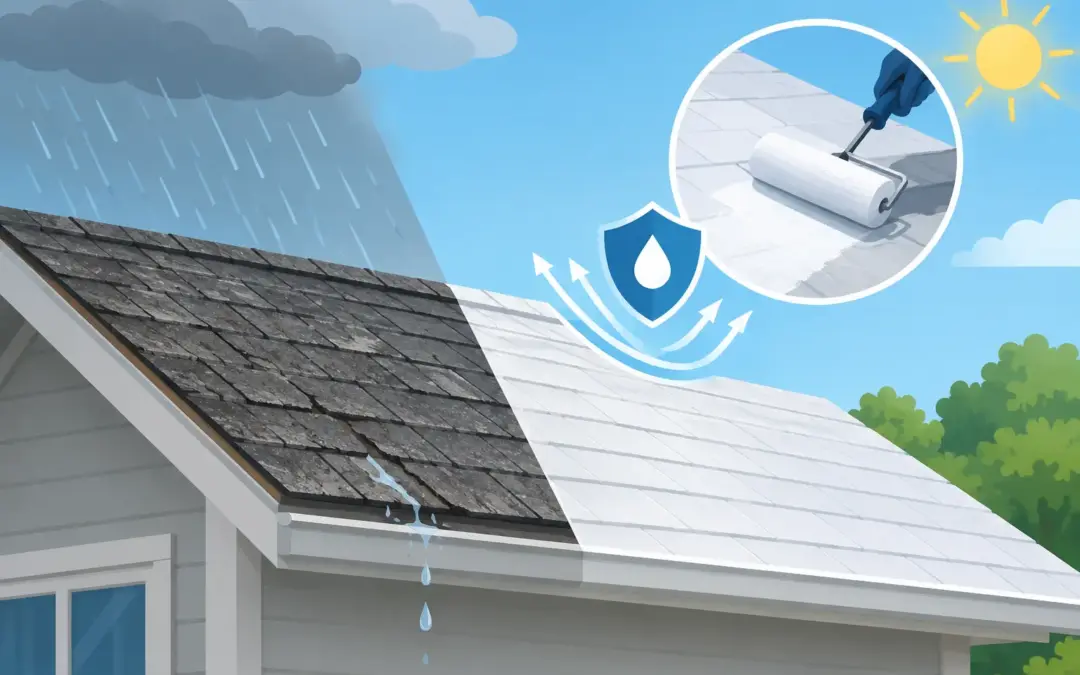
A brown ceiling stain rarely starts as a dramatic roofing emergency. More often, it is the late-stage result of shingles that have become brittle, flashing that has loosened, or a small opening that has allowed water in over time. So, can roof treatments stop leaks? The honest answer is: they can help prevent certain future leaks by restoring aging shingles, but they are not a substitute for repairing an active roof failure.
For homeowners, that distinction can prevent an expensive mistake. For roofing professionals, it creates a better conversation than the usual repair-or-replace sales pitch. The right solution starts with a clear assessment of what is allowing water to enter, then looks at whether the existing roof can be restored and protected for more productive years.
What a Roof Treatment Can and Cannot Do
An aging asphalt shingle roof does not always need replacement simply because it looks worn. Sun exposure, heat cycles, rain, and seasonal temperature swings gradually draw out the oils that help shingles remain flexible. As shingles dry out, they can curl, crack, shed granules, and lose color. That deterioration increases the roof’s vulnerability to water intrusion.
A professional roof treatment is designed to address that aging process. Roof Shield’s proprietary biodegradable treatment penetrates weathered asphalt shingles at a molecular level to restore flexibility and help reduce ongoing granule loss. When shingles are still structurally sound, restoration can improve their ability to perform as a water-shedding surface while refreshing curb appeal.
But treatment does not magically seal every leak. It cannot replace missing shingles, rebuild rotten decking, correct poor roof installation, or repair a failed pipe boot. If water is already entering through a specific defect, that defect must be repaired first. Clean. Restore. Protect. is a smart long-term approach only when repair work and restoration are matched to the roof’s actual condition.
When Roof Treatments May Help Prevent Leaks
The strongest candidate for treatment is a roof that is aging but still intact. Its shingles may look faded, dry, or slightly rough, yet they remain in place and continue to provide a continuous protective layer. In this situation, rejuvenating the shingles can slow the deterioration that often leads to more costly problems later.
Treatment may be especially valuable when a roof shows early or moderate signs of weathering, such as granules accumulating in gutters, dull color, or shingles that feel dry and rigid. These signs do not automatically mean the roof is leaking. They do signal that the roof is losing the flexibility it needs to handle normal expansion, contraction, wind, and weather.
A restored shingle roof can also be a practical option for homeowners preparing to sell, maintaining a long-held property, or trying to avoid the disruption and landfill waste of a premature tear-off. Extending functional roof life preserves an existing asset rather than discarding it before its time.
Restoration Works Best as Preventive Maintenance
Think of a roof treatment as maintenance with performance benefits, not a patch in a bottle. The goal is to protect shingles before small age-related weaknesses become bigger repair issues. This is why timing matters. A roof that is treated while it remains viable may avoid the accelerated decline that makes full replacement the only sensible option.
That approach also gives contractors a more complete service model. Instead of treating every weathered roof as a replacement lead, certified applicators can provide a value-focused alternative for qualified customers. It is a differentiated service that helps homeowners protect their budget while giving businesses a meaningful restoration category beyond traditional replacement work.
When a Treatment Will Not Stop a Leak
Active leaks require diagnosis, not assumptions. Water can travel along rafters, under underlayment, or through insulation before it appears on a ceiling, so the visible stain is not always directly below the source. A qualified roof professional should inspect the full system, including shingles, flashing, penetrations, valleys, vents, gutters, and attic conditions.
Treatment should not be presented as the answer when the roof has major structural damage, widespread missing shingles, exposed decking, advanced deterioration, or leaks caused by failed flashing and penetrations. Those problems need repair. In some cases, particularly when damage is extensive or the roof has reached the end of its serviceable life, replacement remains the responsible recommendation.
Homeowners should also be cautious about products that promise to coat over every roofing problem. A surface coating can sometimes trap moisture, alter the roof’s intended drainage behavior, or conceal defects that still need attention. Asphalt shingles are part of a layered system. Effective roof care respects that system instead of simply covering it up.
The Right Process: Inspect, Repair, Restore
A dependable answer to a leak concern follows a logical sequence. First, identify the source of water intrusion and complete any necessary repairs. This may include replacing damaged shingles, securing flashing, addressing a failed boot around a plumbing vent, or correcting debris buildup that is forcing water where it does not belong.
Next, evaluate whether the remaining shingles are suitable for restoration. A professional assessment should consider shingle condition, roof age, slope, visible wear, prior repairs, and the overall integrity of the roof. Not every roof qualifies, and that is a good thing. Honest qualification protects the homeowner and supports a better outcome.
Once a roof is approved for treatment, the surface is cleaned and prepared so the restorative product can be applied consistently. The treatment is then professionally applied to revive weathered shingles and support continued performance. Roof Shield backs qualifying treated roofs with a five-year transferable warranty, adding confidence for homeowners who want a documented, value-driven alternative to immediate replacement.
Cost, Sustainability, and Long-Term Value
Replacement is sometimes necessary, but it is not automatically the best first move. A full tear-off can involve substantial cost, noise, disruption, and disposal of materials that may still have useful life remaining. When restoration is appropriate, it can cost significantly less than replacement while reducing the volume of roofing material sent to landfills.
That does not mean homeowners should delay a necessary repair in the name of savings. Waiting on a genuine leak can lead to damaged insulation, stained drywall, mold concerns, and wood rot. The smarter financial decision is to repair active entry points quickly, then determine whether the roof can be restored to extend its working life.
For property owners, the value is straightforward: preserve what is still serviceable, avoid replacement before it is truly warranted, and protect the home with a solution matched to its condition. For roofing professionals, offering restoration expands the ability to solve real customer problems without forcing every conversation toward a tear-off.
How to Know Which Path Your Roof Needs
If you notice a leak, start with a professional inspection rather than choosing a product based on appearance alone. Ask what caused the water intrusion, what repair is required, and whether the shingles are still viable for restoration after that repair. A credible provider should be able to explain the difference clearly and recommend replacement when restoration is not appropriate.
The best roof decision is not the fastest sale or the cheapest short-term fix. It is the one that stops water where it is entering, protects the roof materials that still have value, and gives you a practical plan for the years ahead.