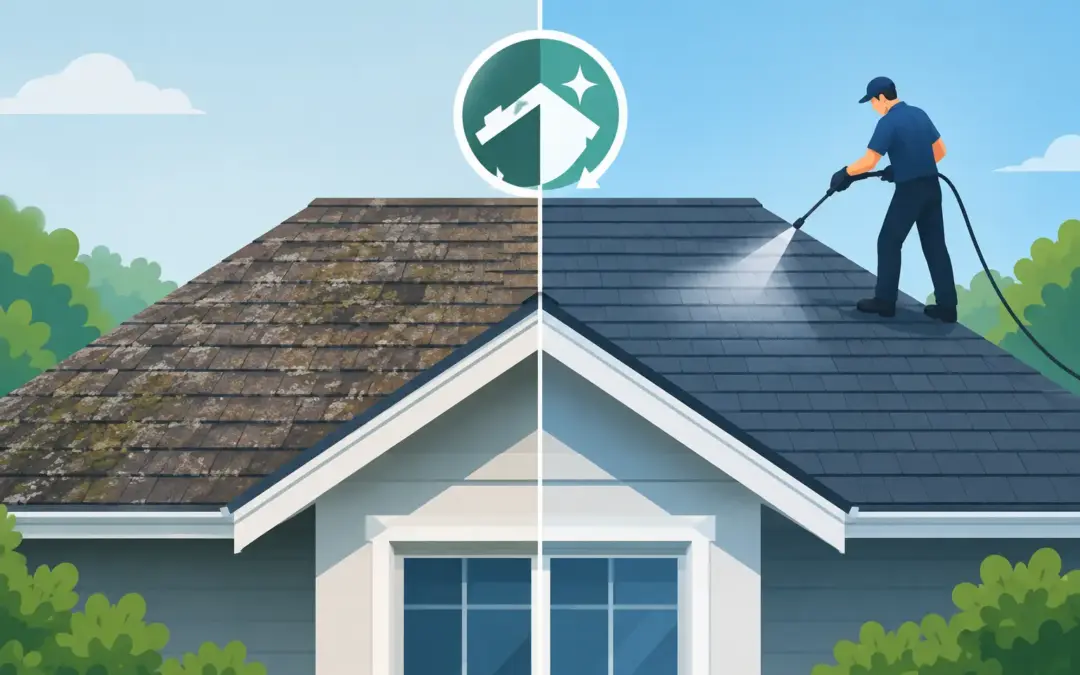
A roof can look faded, dry, and worn long before it has reached the end of its useful life. For many homeowners, the first recommendation is a costly replacement. But roof rejuvenation offers another path for qualifying asphalt shingle roofs: restore the shingles’ flexibility and protective qualities before premature replacement becomes the only option.
This is not a cosmetic shortcut or a way to cover up a failing roof. When applied to a roof that is structurally sound and professionally evaluated, rejuvenation is a practical maintenance investment. It can help aging shingles perform better, look richer in color, and remain in service longer while keeping usable roofing material out of the landfill.
What Is Roof Rejuvenation?
Asphalt shingles contain oils that help them stay flexible and resilient. Years of sun exposure, temperature swings, rain, wind, and ultraviolet light gradually deplete those oils. Shingles can become dry and brittle, lose granules, and show a dull, weathered appearance. That aging process is normal, but it does not always mean the roof needs to be torn off immediately.
Roof rejuvenation is a professional treatment designed to restore oils to aging asphalt shingles at a molecular level. A biodegradable treatment is applied to the roof surface, where it absorbs into eligible shingles and helps improve flexibility. The goal is to slow the visible and functional effects of shingle aging, including dryness, brittleness, and ongoing granule loss.
The difference matters. A replacement removes the existing roof and installs a new one. Rejuvenation preserves a roof that still has sound decking, acceptable shingle condition, and no underlying failure requiring repair. It is an asset-preservation decision, not a replacement substitute for every roof.
When Roof Rejuvenation Makes Sense
The best candidates are aging asphalt shingle roofs that show signs of weathering but remain fundamentally intact. A homeowner may notice fading, minor granule loss, dry-looking shingles, or a roof that has lost much of its original curb appeal. These are often the roofs that deserve a closer look before a replacement decision is made.
A professional assessment should come first. The applicator should inspect for active leaks, widespread cracking, exposed fiberglass mat, missing shingles, storm damage, failing flashing, soft decking, or structural concerns. Those conditions may require repair or full replacement. Rejuvenation cannot correct installation defects, hidden water damage, or shingles that are already beyond serviceable condition.
Timing also affects value. Treating an eligible roof before it becomes severely brittle can provide a stronger return than waiting until damage is widespread. Homeowners who view roof care as planned maintenance rather than an emergency expense are often in the best position to benefit.
The Practical Value for Homeowners
Roof replacement is disruptive. It can involve tear-off crews, material deliveries, noise, landscaping precautions, and a major capital expense. For a qualifying roof, rejuvenation can provide a more affordable way to extend functional life without immediately taking on the cost and disruption of replacement.
The visible improvement is valuable, too. Restored flexibility and revitalized color can help an aging roof look better from the street, supporting curb appeal without masking the roof under paint or a surface coating. Unlike roof coatings that sit primarily on top of shingles, a rejuvenation treatment is intended to condition the shingles themselves.
There is also a sustainability benefit. Millions of tons of roofing waste are removed and discarded each year. Keeping a viable roof in service longer reduces demand for a premature tear-off and delays material from entering the waste stream. For homeowners trying to make practical, environmentally responsible maintenance choices, that is a meaningful advantage.
Cost should still be considered honestly. Rejuvenation is not free, and its value depends on roof condition, roof size, pitch, accessibility, local labor costs, and the amount of preparation required. Yet compared with an immediate full replacement, it can be a substantially lower-cost option for the right roof.
What a Professional Application Should Include
Quality control is central to a successful result. A credible roof rejuvenation service begins with an assessment, not a sales pitch. The provider should explain what they found, identify any repairs needed first, and be clear about whether the roof qualifies for treatment.
The application process generally follows four practical stages:
- Inspect and document. The roof is evaluated for condition, eligibility, and areas that need repair before treatment.
- Clean and prepare. Debris, surface contaminants, and biological growth are addressed as needed so the roof can be properly prepared.
- Apply the treatment. The rejuvenating formula is professionally applied at the correct coverage rate for consistent absorption and performance.
- Review and protect. The completed work is documented, and the homeowner receives care guidance and applicable warranty information.
Application should be handled by trained professionals who understand roof safety, product handling, weather conditions, and proper coverage. A treatment is only as dependable as the inspection and application behind it.
Roof Shield supports this approach through a certified applicator network, pairing proprietary biodegradable technology with training, operational support, and a five-year transferable warranty for qualifying treated roofs. That combination gives homeowners a clearer standard for evaluating a service that may be new to their market.
Rejuvenation Versus Replacement: The Real Decision
The question is not whether one option is always better. The right choice depends on what the roof needs now.
Replacement is the responsible answer when a roof has extensive damage, active leakage caused by system failure, compromised decking, severe shingle deterioration, or storm-related issues that cannot be repaired. In those cases, preserving the old roof may create more expense later.
Rejuvenation is a stronger fit when the roof remains structurally sound but is showing predictable signs of aging. It can help owners defer replacement, preserve the existing roofing investment, and plan future capital expenses with more confidence. It may also be appealing to homeowners preparing to sell, provided they disclose the roof’s condition accurately and follow local real estate requirements.
A trustworthy provider should be comfortable recommending replacement when rejuvenation is not appropriate. That honesty protects the homeowner and strengthens the value of restoration as a category.
A Growth Opportunity for Roofing Professionals
For roofing and home-service businesses, roof rejuvenation creates a service category between cleaning and replacement. It gives contractors a way to serve homeowners whose roofs are not ready for replacement but still need professional attention.
That is good for the customer relationship. Instead of telling every homeowner to wait until failure or commit to a major replacement, a contractor can offer a value-focused restoration option. The work can generate new conversations with past customers, support seasonal revenue, and differentiate a business in competitive markets.
Success depends on disciplined qualification. Applicators need to understand which roofs are eligible, how to communicate realistic expectations, and when to refer a customer toward repair or replacement. Protected territories, technical training, marketing support, and consistent application standards can help operators build this service with confidence rather than treating it as an add-on with unclear results.
For entrepreneurial contractors, the opportunity is not simply another product to sell. It is a chance to lead with a smarter recommendation: Clean. Restore. Protect. That message meets homeowners where they are – concerned about cost, worried about roof condition, and looking for an option that makes sense.
A weathered roof does not automatically need a tear-off. The next helpful step is a professional evaluation that looks beyond surface appearance and answers a more useful question: can this roof still be preserved?