
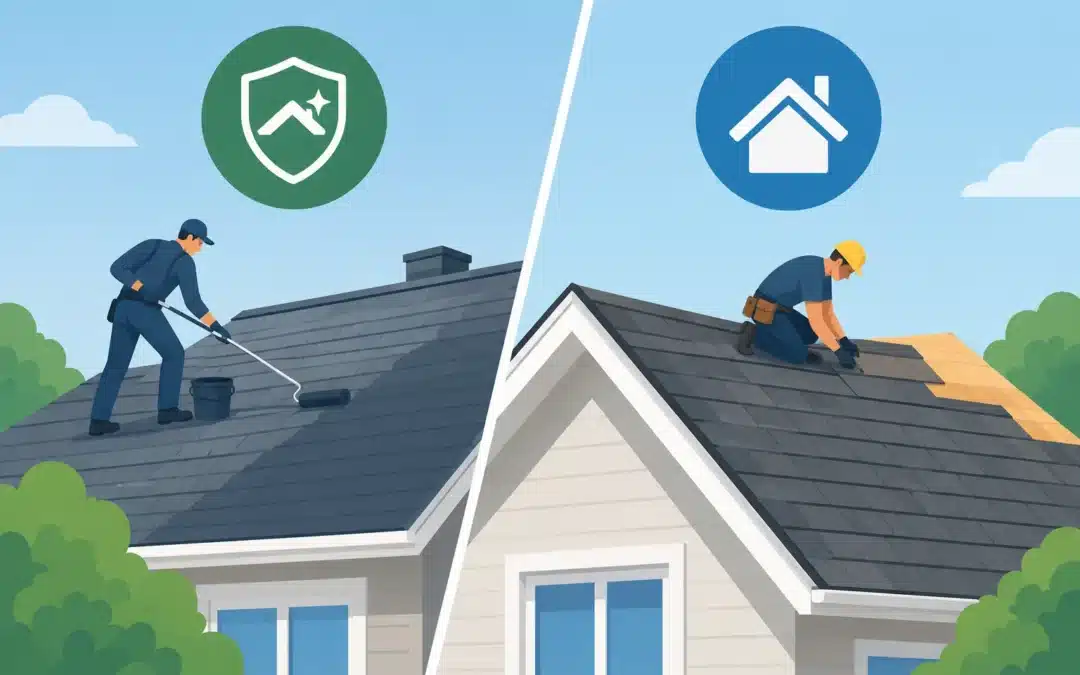
A roof does not have to be brand-new to be worth protecting. Many asphalt shingle roofs begin to fade, shed granules, and look tired years before they reach the point of structural failure. That is where roof preservation versus reroofing becomes a practical financial decision, not just a maintenance conversation.
For homeowners, the right answer depends on what is happening beneath the shingles as much as what is visible from the driveway. For roofing professionals, it is an opportunity to offer customers a credible solution between doing nothing and committing to a costly replacement. Clean. Restore. Protect. can be a smarter path when the roof still has serviceable life left.
Roof Preservation Versus Reroofing: The Core Difference
Roof preservation is designed to extend the useful life of an aging, still-functional asphalt shingle roof. After proper assessment and cleaning, a restorative treatment can replenish the flexibility that weather, heat, and oxidation gradually take from shingles. The goal is to help preserve the roof’s existing materials, reduce ongoing granule loss, refresh color, and delay replacement when replacement is not yet necessary.
Reroofing, often used casually to mean roof replacement, involves installing new roofing materials over an existing roof or replacing the existing roofing system altogether. A full tear-off replacement removes old shingles and allows the contractor to inspect decking and related components. It is the necessary choice when a roof has failed or is too damaged to restore.
The distinction matters because a roof can look old without being worn out. Cosmetic fading, dry-looking shingles, and gradual granule loss may point to an aging roof that can benefit from preservation. Active leaks, soft decking, extensive storm damage, or widespread shingle failure point in a different direction.
When Roof Preservation Is the Smarter Investment
Preservation is most valuable when a roof is aging but remains fundamentally sound. The shingles should still be attached, the roof deck should be stable, and there should be no signs that water has been entering the home. A qualified inspection should always come first because no treatment should be used to cover up a roof that needs repair or replacement.
For eligible roofs, preservation can deliver a clear cost advantage. Full replacement involves materials, labor, disposal, and the disruption of a major exterior project. Restoration typically requires far less material and labor, helping homeowners protect a significant existing asset at a substantially lower cost than replacement.
There is also a timing advantage. Homeowners often feel pressured to replace a roof once it starts to look weathered, especially when preparing to sell or responding to an insurer’s questions. Preserving a qualifying roof can improve its appearance and functional condition without forcing a premature capital expense. That can free up budget for other repairs, renovations, or savings goals.
Sustainability is another meaningful factor. Every roof kept in service longer is roofing material that does not enter a landfill today. Preservation reduces the demand for new shingles and avoids the waste created when a roof is removed before the end of its functional life. For homeowners who want practical environmental value, that is a benefit that shows up in both the budget and the waste stream.
When Reroofing Is the Right Call
A restoration-minded approach should never mean ignoring a failing roof. Reroofing is the responsible solution when the roof can no longer reliably protect the structure. If shingles are missing across large areas, curled or cracked beyond repair, or repeatedly leaking, treatment alone is not the answer.
A replacement is also often required after severe wind or hail damage, when the roof deck is compromised, or when multiple layers of roofing create code or performance concerns. Water stains on ceilings, sagging roof lines, soft spots in the decking, and mold related to roof leaks deserve prompt professional attention. These are not cosmetic problems.
The same is true of roofs near the end of their design life with extensive wear. Preservation works by restoring and protecting viable shingles. It cannot rebuild missing shingles, correct poor installation, repair rotten decking, or solve underlying ventilation problems. An honest provider will explain those limits clearly.
The best decision is not based on a calendar alone. Asphalt shingle roofs age at different rates depending on climate, attic ventilation, sun exposure, installation quality, tree coverage, and storm history. Two roofs installed in the same year may be in very different condition.
Compare the Real Costs, Not Just the Initial Price
Replacement is a long-term investment, but it comes with a large upfront expense. In addition to the installed cost, homeowners may face disposal charges, repairs uncovered during tear-off, landscaping cleanup, and the inconvenience of a multi-day project. Those costs may be justified when the roof has failed. They are harder to justify when the roof still has years of protectable life.
Preservation has a different value proposition. It aims to extend service life and improve appearance at a fraction of replacement cost for qualifying roofs. The financial benefit is not that a treatment makes every roof permanent. It is that it can help homeowners avoid replacing a roof prematurely and make a more deliberate plan for the future.
That distinction is especially useful for property owners balancing competing priorities. A homeowner planning to stay in the house may want to preserve a sound roof and postpone a major project. A seller may want to improve curb appeal and demonstrate responsible maintenance. A property manager may value a predictable way to protect roofing assets across multiple buildings.
What a Professional Evaluation Should Cover
Before choosing either path, ask for an inspection that looks beyond surface appearance. A reliable assessment should consider shingle condition, granule loss, flashing, penetrations, roof valleys, drainage, attic ventilation, signs of water intrusion, and the condition of the roof deck where visible.
Homeowners should also ask direct questions. Is the roof structurally sound? Are the shingles still viable for treatment? What repairs need to happen first? What result should be expected from preservation, and what is outside its scope? Is there warranty coverage?
Roof Shield’s proprietary biodegradable treatment is applied by certified applicators to qualifying asphalt shingle roofs. The process is built around controlled application and measurable customer value, with a five-year transferable warranty for treated roofs. That certification model helps ensure the homeowner receives an assessment and application process designed for the technology, rather than a one-size-fits-all sales pitch.
A Better Conversation for Homeowners and Contractors
The old replacement-first model leaves a gap for roofs that are clearly aging but not ready for the landfill. Homeowners need an option that respects their budget without asking them to gamble on an unproven shortcut. Contractors need an option that creates value before replacement becomes unavoidable.
For service professionals, roof preservation can become a differentiated category that complements repair and replacement work. It creates a reason to reconnect with past customers, offer a lower-cost solution to qualified prospects, and build trust through condition-based recommendations. The strongest long-term customer relationship is not built by selling the largest project every time. It is built by recommending the right project at the right time.
For homeowners, the decision should start with evidence. Do not replace a roof solely because it has lost some color or looks older than the neighbor’s roof. Do not preserve a roof solely because the price is lower. Choose the path that matches the roof’s actual condition, your timeline, and the protection your home needs.
A well-maintained roof is one of the most valuable systems in a home. If yours is weathered but still sound, schedule a qualified evaluation before assuming replacement is the only option. The right recommendation can protect your home, your budget, and the useful life already built into your roof.