
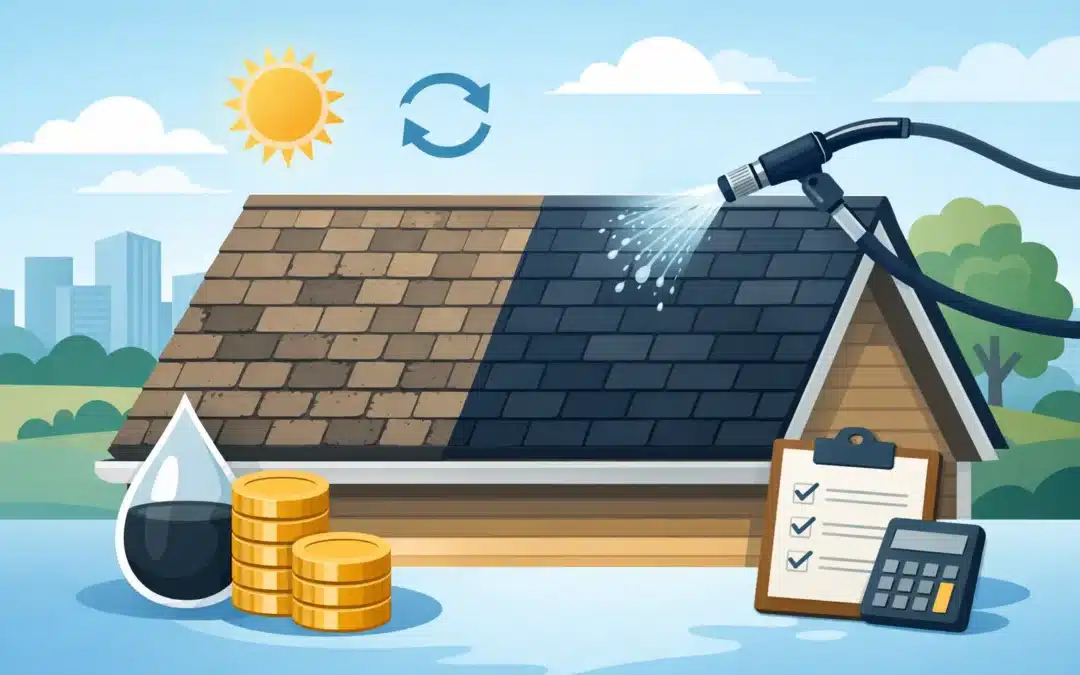
A roof can look tired long before it is ready for the landfill. Fading color, dry-looking shingles, early granule loss, and reduced flexibility often lead homeowners to ask about asphalt shingle rejuvenation cost before committing to a full replacement. That is the right question. A professional restoration treatment can be a substantially more affordable way to protect an aging roof when the roof structure and shingles are still viable.
The exact price is not one-size-fits-all. Every roof has its own size, slope, condition, access requirements, and level of preparation needed. What matters is whether rejuvenation delivers meaningful added service life and improved appearance for less disruption and expense than replacing a roof prematurely.
What Asphalt Shingle Rejuvenation Cost Covers
Asphalt shingle rejuvenation is not a surface coating or a cosmetic spray. A qualified restoration process begins with evaluating the roof to confirm it is a good candidate. The goal is to treat weathered shingles at the molecular level, helping restore lost flexibility and protective oils while supporting stronger granule retention and renewed color.
A complete estimate typically accounts for the roof inspection, necessary cleaning or preparation, treatment application, labor, equipment, and warranty coverage where available. It may also include attention to areas that require special care, such as steep slopes, multi-story elevations, valleys, skylights, solar equipment, or limited access around the home.
The most useful way to view the cost is as an asset-preservation decision. You are not buying a new roof. You are investing in extending the functional life of the roof you already own, provided it remains structurally sound and appropriate for treatment.
The Factors That Shape Your Price
Roof size is usually the largest pricing driver. More square footage requires more material, labor, and application time. A simple, single-story roof with broad, accessible planes generally takes less work than a roof with multiple dormers, sharp pitches, complex valleys, and a crowded layout.
Condition matters just as much. Shingles that are dry, faded, and beginning to lose flexibility may be excellent candidates for rejuvenation. A roof with active leaks, widespread missing shingles, major storm damage, failing decking, or serious flashing problems needs repairs or replacement work first. Rejuvenation is designed to preserve aging shingles, not cover up conditions that compromise the roof system.
Location can also influence asphalt shingle rejuvenation cost. Labor markets, travel distance, local permit requirements, climate exposure, and the availability of trained applicators all affect a project quote. Homes in heavily wooded areas may need more cleaning and preparation due to moss, algae, debris, or persistent moisture.
Finally, the value of a transferable warranty should be considered alongside the application price. A documented, warranty-backed treatment can offer greater confidence than an unverified maintenance product applied without a thorough roof assessment.
Rejuvenation vs. Replacement: Compare the Right Costs
A replacement quote includes far more than new shingles. It can involve tear-off, disposal, underlayment, flashing work, decking repairs, installation labor, material costs, and the disruption of a full construction project. It also creates a significant amount of roofing waste.
Rejuvenation takes a different approach. When a roof is still fundamentally sound, restoration may help delay replacement by improving shingle flexibility and reducing the progression of age-related deterioration. That can preserve a major home asset while avoiding the immediate cost and inconvenience of replacement.
Still, restoration is not automatically the best answer simply because it costs less. A roof near the end of its service life due to structural failure, extensive water intrusion, or severe physical damage should be addressed with the repair or replacement work it needs. The smarter solution is the one that matches the actual condition of the roof.
For many homeowners, the key comparison is not just today’s invoice. It is the cost of acting now to maintain an eligible roof versus paying for a replacement years earlier than necessary. That is where professional evaluation creates clarity.
When Rejuvenation Delivers the Strongest Value
The best candidates are aging asphalt shingle roofs that show normal weathering but remain intact. Signs can include a dull or faded appearance, shingles that look dry, early signs of granule loss, and a roof approaching the stage when replacement would normally enter the conversation.
Rejuvenation can be especially valuable for homeowners preparing to sell, managing a rental property, or protecting a long-term residence. A refreshed roof can improve curb appeal and help demonstrate proactive maintenance without turning the property into a construction zone.
It also makes sense for homeowners who care about reducing waste. Replacing a roof before it is necessary sends usable materials to a landfill and consumes new materials that may not yet be needed. Clean. Restore. Protect. That approach supports both responsible maintenance and practical savings.
How to Get an Accurate Rejuvenation Estimate
A credible estimate starts with a roof-specific inspection, not a price pulled from a generic calculator. Ask the provider to explain the current condition of your shingles, whether repairs are required before treatment, and what results are realistic for your roof.
You should also understand what preparation is included. Proper cleaning and inspection help ensure the treatment is applied to a roof that is ready to receive it. If a provider cannot clearly describe the process, the roof’s eligibility, and the coverage behind the work, keep looking.
A certified applicator should be able to discuss the treatment process in plain language: assess the roof, prepare the surface, apply the proprietary rejuvenating treatment, and review the finished result. Roof Shield works through trained, certified applicators to help homeowners access a controlled restoration process supported by proven technology and warranty-backed value.
Before approving any proposal, compare more than the bottom-line number. Consider the scope of work, the provider’s training, the expected benefit for your specific roof, warranty terms, and whether the company has experience treating asphalt shingles in your climate.
Questions Homeowners Commonly Ask
Is rejuvenation cheaper than roof replacement?
For an eligible roof, it is generally substantially more affordable than a full replacement because it preserves the existing shingles rather than removing and rebuilding the roofing system. The actual savings depend on your roof’s size, complexity, condition, and the local replacement market.
Can rejuvenation fix leaks or missing shingles?
No. Active leaks, damaged flashing, missing shingles, and structural issues must be repaired first. Rejuvenation is a restoration service for aging asphalt shingles that are still in suitable working condition.
How long does the process take?
Application time varies with roof size, weather, access, and preparation needs. Many projects can be completed with far less disruption than a full tear-off and replacement, but your applicator should set expectations after the inspection.
Will a treated roof look better?
A quality rejuvenation treatment can revitalize shingle color and improve the roof’s overall appearance while addressing the loss of flexibility that comes with weathering. Results depend on the original shingle color, age, staining, and existing wear.
Aging shingles do not always mean it is time to replace your roof. If the roof is still a viable candidate, a professional inspection can show whether restoration is the practical next move: protect what is working, address what needs repair, and reserve replacement for the moment it is truly necessary.